Estos proyectos marcaron escala, código o modelo constructivo en la construcción con madera estructural a nivel internacional.
Recent milestones
1265 Borregas · Sunnyvale, California (Google)
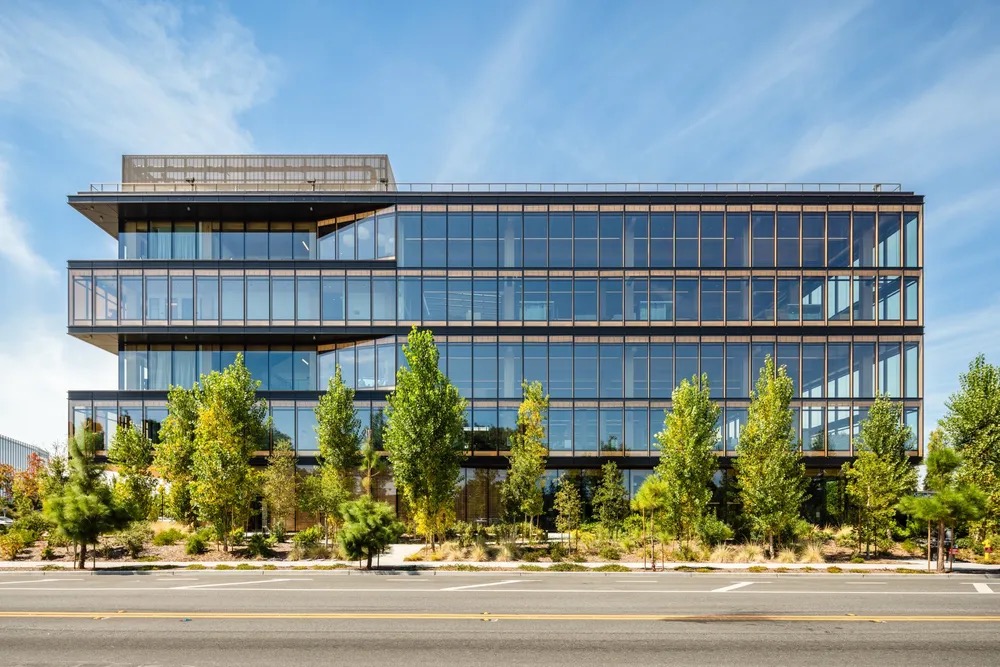
This is the first corporate building constructed by Google utilizing engineered mass timber (mass timber), inaugurated in Sunnyvale (California) in 2025. According to the official information published by the company, the structural project exposes the timber in both interior finishes and facade elements to leverage the benefits of biophilic design and collaborator comfort. In environmental terms, the building documents a targeted 96% reduction in embodied carbon emissions compared to an equivalent conventional concrete and steel design. To achieve this goal, one hundred percent sustainably sourced timber certified by the Forest Stewardship Council (FSC, Forest Stewardship Council) was specified, operating under a net-zero electricity consumption model backed by rooftop solar panels and pursuing Gold certification under the Leadership in Energy and Environmental Design (LEED, Leadership in Energy and Environmental Design) standard. This milestone consolidates the viability of structural timber in corporate campuses at a
Aquatics Centre · Saint-Denis, Paris
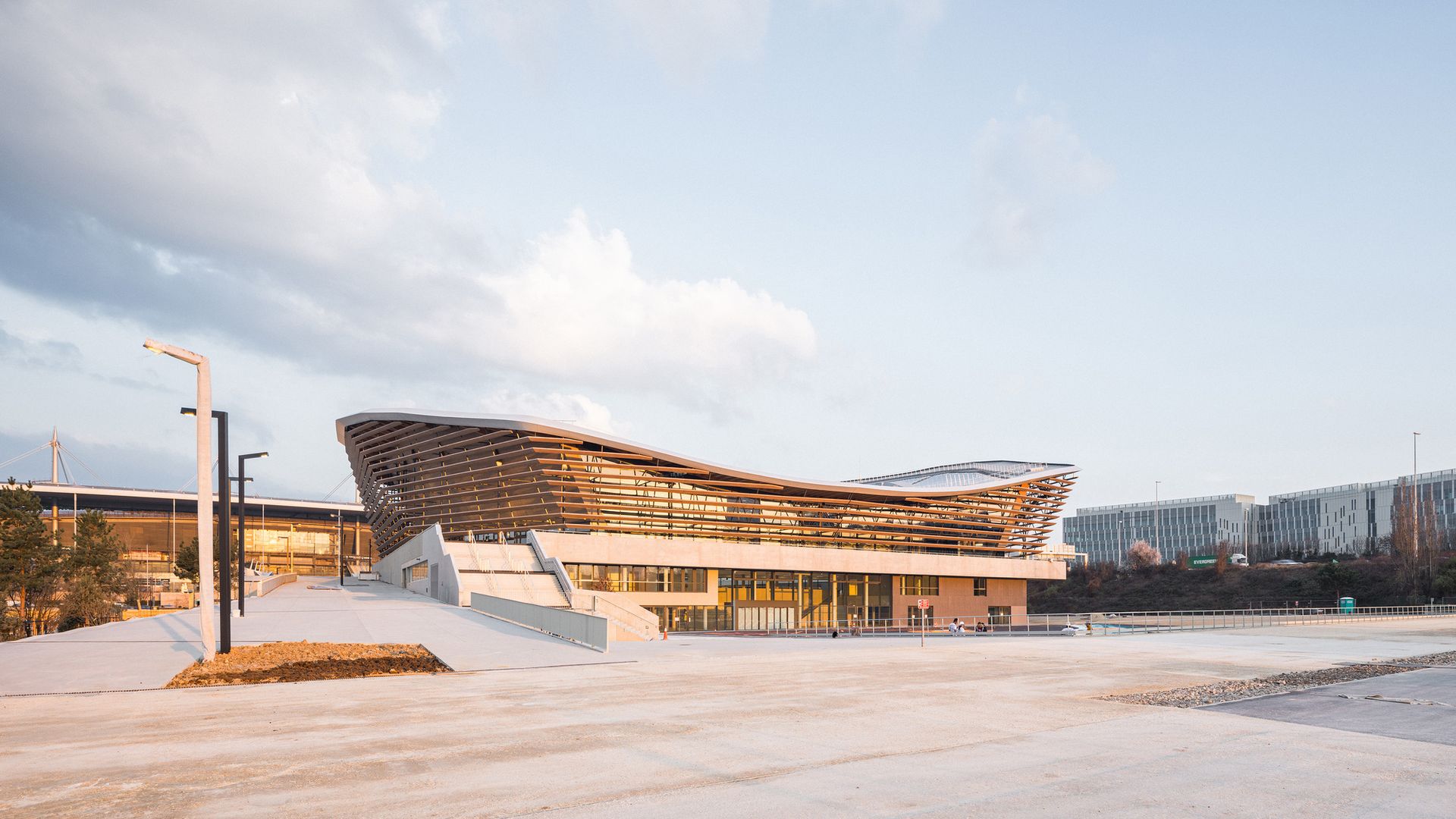
The Saint-Denis Aquatics Centre is the only permanent sports venue built specifically for the Paris 2024 Olympic Games. Designed by the renowned firms VenhoevenCS and Ateliers 2/3/4/, the complex spans ~20,000 square meters and stands out for its impressive suspended roof with a concave, undulating geometry that reduces the indoor air volume to be climatized by 20%. The engineered structural timber super-structure was manufactured and installed by the specialist firm MATHIS SAS with beams supplied by the forestry company Stora Enso, complemented by a rooftop solar plant and strict circular economy criteria for the furniture. With a capacity to seat 5,000 spectators, this aquatics center represents a monumental example of how timber can lead large-scale, highly complex permanent public infrastructure.
Tall buildings and international references
Stadhaus (Murray Grove) · London
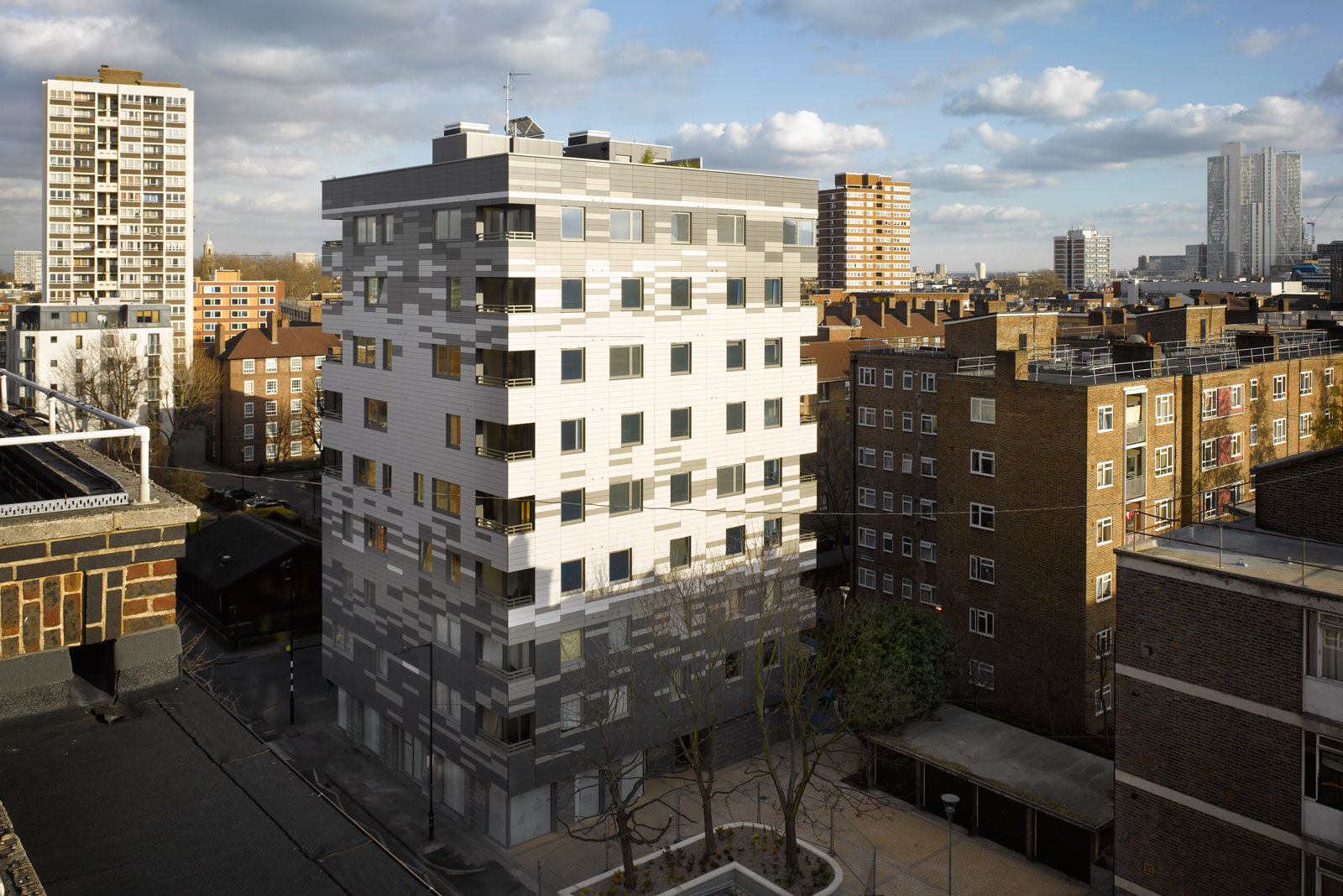
Inaugurated in London in the year 2009, Stadhaus is a nine-story residential building that set a historical precedent by becoming the first mid-rise structure built entirely with load-bearing panels of Cross-Laminated Timber (CLT, Cross-Laminated Timber). Designed by the prestigious firm Waugh Thistleton Architects and driven by the developer Telford Homes, the project proved to the financial and regulatory sectors that engineered structural timber is capable of competing in terms of urban density, speed, and economy in complex metropolitan environments, paving the way for the modernization of European building codes.
Ascent · Milwaukee, USA
With an impressive height of 25 stories (~86 meters), the Ascent mixed-use tower in Milwaukee (Wisconsin), completed in 2022, held the world record for the tallest hybrid mass timber building. The architectural design by Korb + Associates and the execution by construction company C.D. Smith were resolved using a superstructure of Glued Laminated Timber (Glulam) columns and beams, and Cross-Laminated Timber (CLT) floor slabs, resting on a traditional concrete podium. The project validated not only the North American seismic-resistant building code criteria under the heavy timber category (Type IV) but also the keen interest of investors and insurance companies in developing sustainable timber skyscrapers in consolidated urban centers.
UBC Brock Commons (Tallwood House) · Vancouver
This iconic 18-story student residence, located on the campus of the University of British Columbia in Vancouver (Canada), was erected in 2017 as a model of industrialized efficiency. The building combines a rigid concrete core for circulation and stability with a superstructure of Glued Laminated Timber (Glulam) columns and Cross-Laminated Timber (CLT) floor slabs. Its structural assembly phase was completed in a record schedule of only 66 days thanks to a comprehensive digital planning using building information modeling (BIM, Building Information Modeling) tools. The university has maintained a real-time monitoring program of moisture content and structural performance of the timber, providing invaluable scientific data to confirm the system's long-term durability.
Mjøstårnet · Brumunddal, Norway
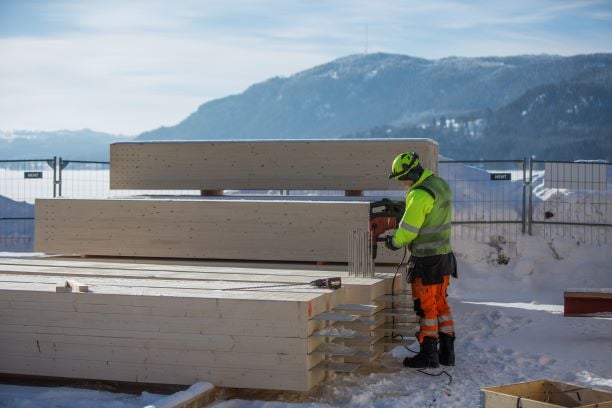
Situated on the shores of Lake Mjøsa in Brumunddal (Norway), this magnificent 18-story, 85.4-meter-tall mixed-use tower was completed in 2019. Designed by Voll Arkitekter and manufactured and installed by the specialist firm Moelven, the structure was resolved using Glued Laminated Timber (Glulam) columns and trusses on its facade and interiors, combined with hybrid floor slabs. Mjøstårnet demonstrated to the world the feasibility of the local Scandinavian forestry supply chain and the ability of mass timber structures to withstand extreme seismic and wind loads in harsh Nordic climates without the need for central concrete cores.
HoHo Wien · Vienna, Austri
Located in the Seestadt Aspern development area in Vienna (Austria), this 24-story, 84-meter-tall mixed-use complex was inaugurated in 2020. Designed by RLP Rüdiger Lainer + Partner, the project employs a hybrid wood-concrete structural system (holz-hybrid) that achieves approximately 75% of the total structural volume in exposed engineered timber. HoHo Wien pushed European regulatory boundaries for fire safety in high-rise buildings, consolidating the Austrian methodology of off-site dry prefabrication and rapid on-site assembly for the hospitality and corporate office sectors.
T3 · Minneapolis, USA
The T3 (Timber, Transit, Technology) prototype, developed by the real estate giant Hines in conjunction with the firm Michael Green Architecture (MGA), represents a seven-story, ~20,800-square-meter office building opened in 2016. Instead of seeking a height record, T3 prioritized commercial repeatability and financial viability by utilizing panels of Nail-Laminated Timber (NLT, Nail-Laminated Timber) and Glued Laminated Timber (Glulam) beams. The commercial success of the project, characterized by a raw industrial aesthetic of exposed timber, motivated Hines to replicate the T3 model across multiple North American metropolitan areas. The foundations of interior design and comfort in exposed engineered timber are developed in depth in our guide on n and comfort in exposed enginee.
Carbon12 · Portland, USA
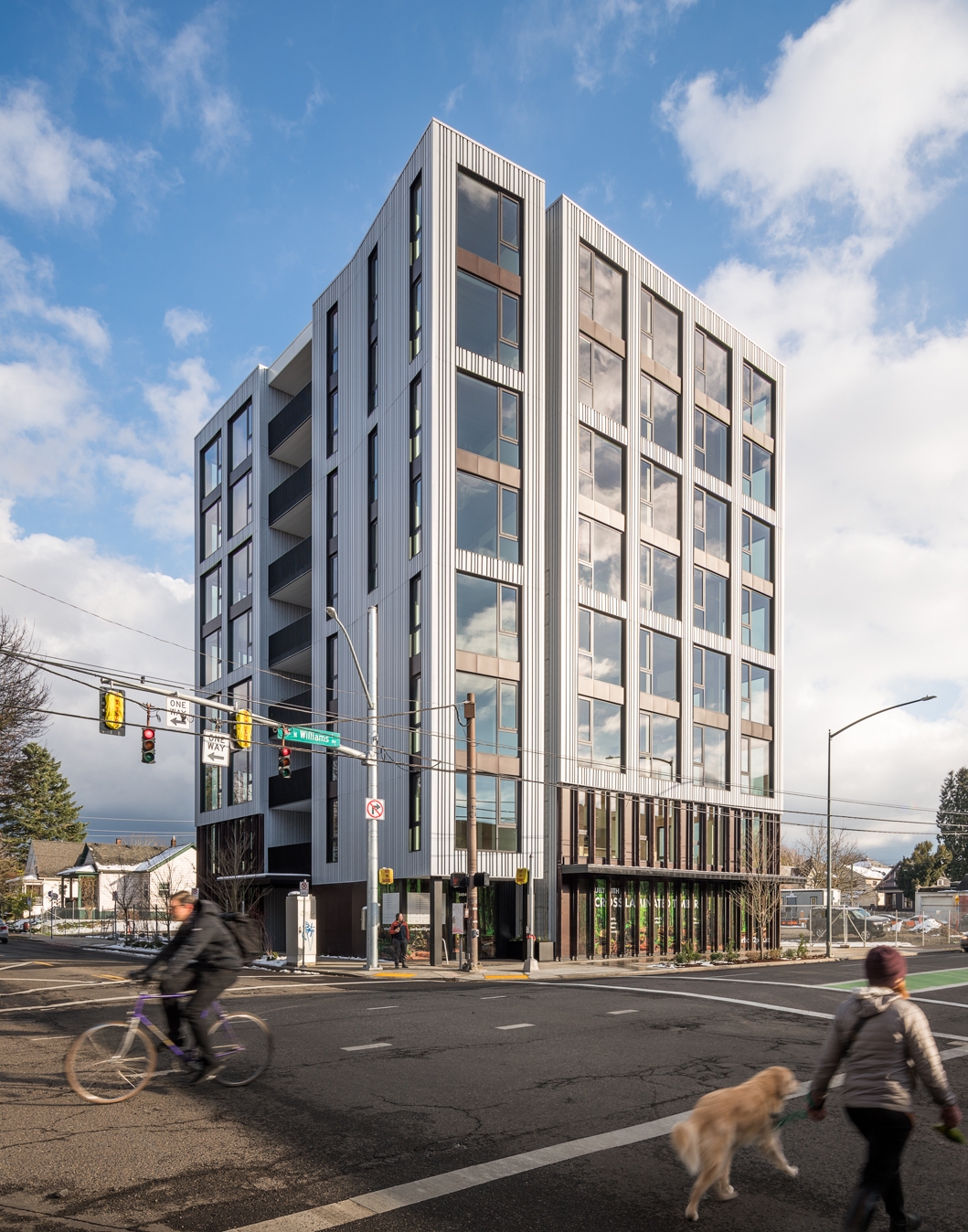
This eight-story residential building, located in Portland (Oregon) and completed in 2018 by the architecture and development firm Kaiser+PATH, is one of the most influential references for urban timber housing on the US West Coast. Solved using a structural framework of Glued Laminated Timber (Glulam) beams and columns with Cross-Laminated Timber (CLT) floor slabs, the project stands out for its rigorous acoustic design and interior vibration isolation. It represents a real-world example of how sensory comfort, biophilic design, and exposed engineered timber improve well-being and increase market premium in the residential sector, as explained in our interior design article.
Go Deeper
- Expo Osaka 2025: Grand Ring, mass timber, and Colombia's pavilion
- Interior design and comfort in timber (Carbon12)
- Latin American timber projects
- Timber neoconstructors
- Mass timber overview (CLT, Glulam)
- How to measure sustainability in buildings: LCA
- Carbon regulations in buildings
- Madebloque services
Madebloque informational edition — May 2026. Links and credits per cited public sources.