Projects we'll see soon
The Dutch Mountains · Eindhoven, Netherlands
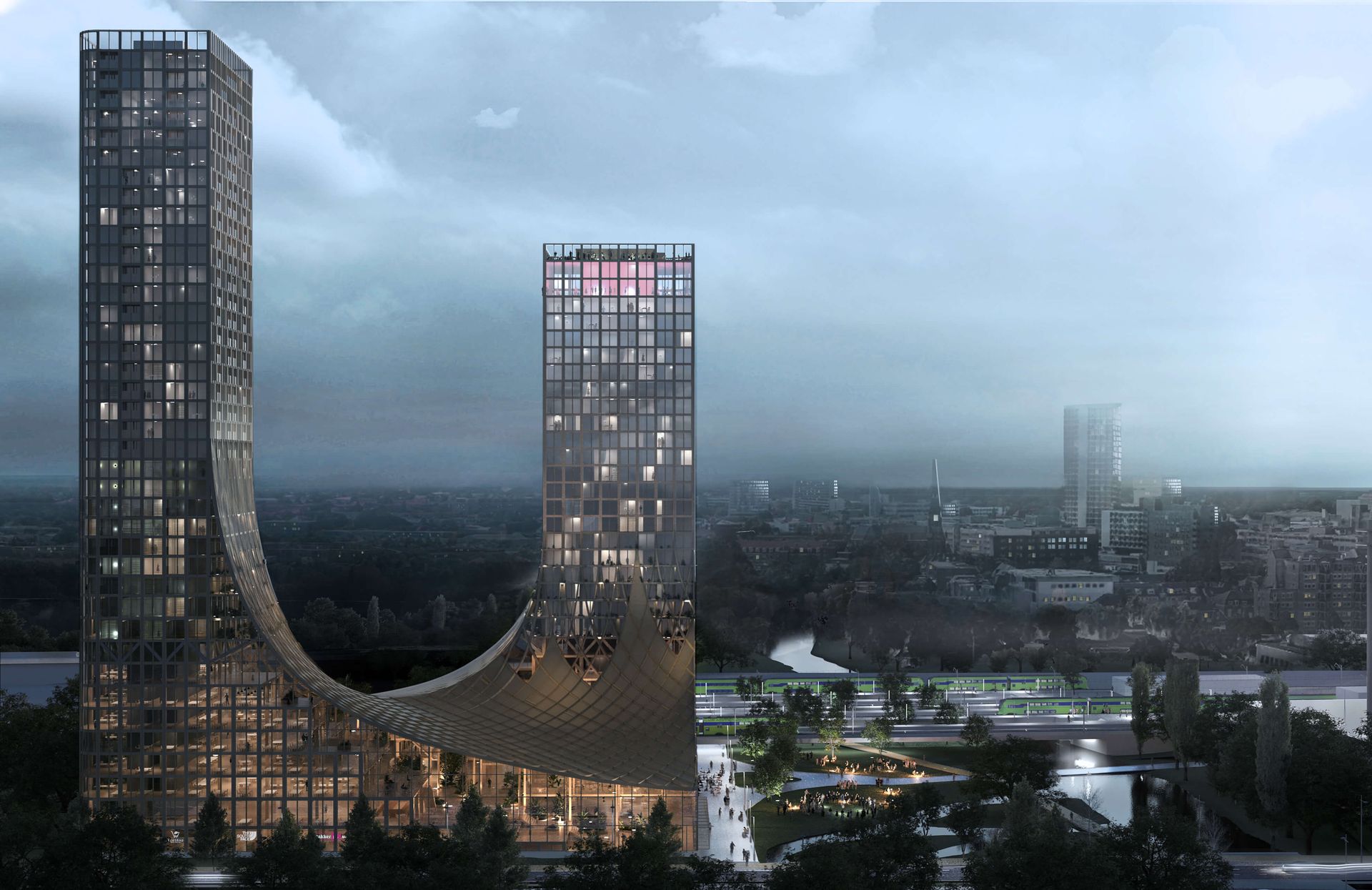
In Eindhoven's dynamic railway zone, the **The Dutch Mountains** project proposes two mixed-use towers that will house offices, homes, and a hotel, linked by a monumental **green inner courtyard** conceived as a "city living room." This central biophilic space is designed to be a node for social integration and meeting. The complex stands out for its focus on circular sustainability: much of its volume will be resolved in bio-based materials, using sustainably sourced structural mass timber that will sequester and store carbon dioxide for decades.
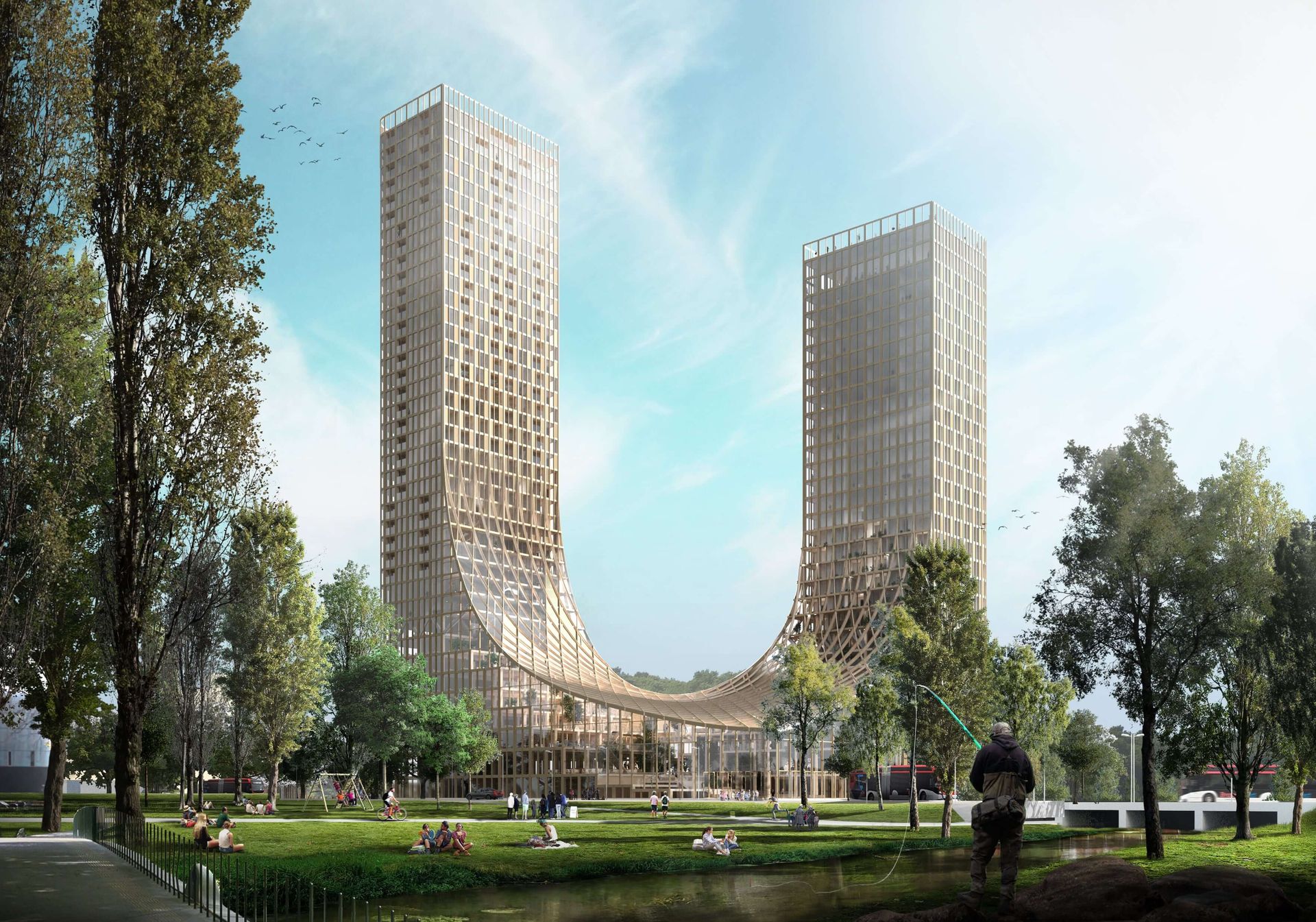
The building's climate control leverages natural passive principles to reduce mechanical air conditioning requirements; a visible circular irrigation system feeds the dense interior vegetation, and excess rainwater is discharged to the Dommel River. The program incorporates photovoltaics in its envelope, shared electric mobility, and wide holistic well-being spaces.
The Hive · 2150 Keith Drive · Vancouver, Canada
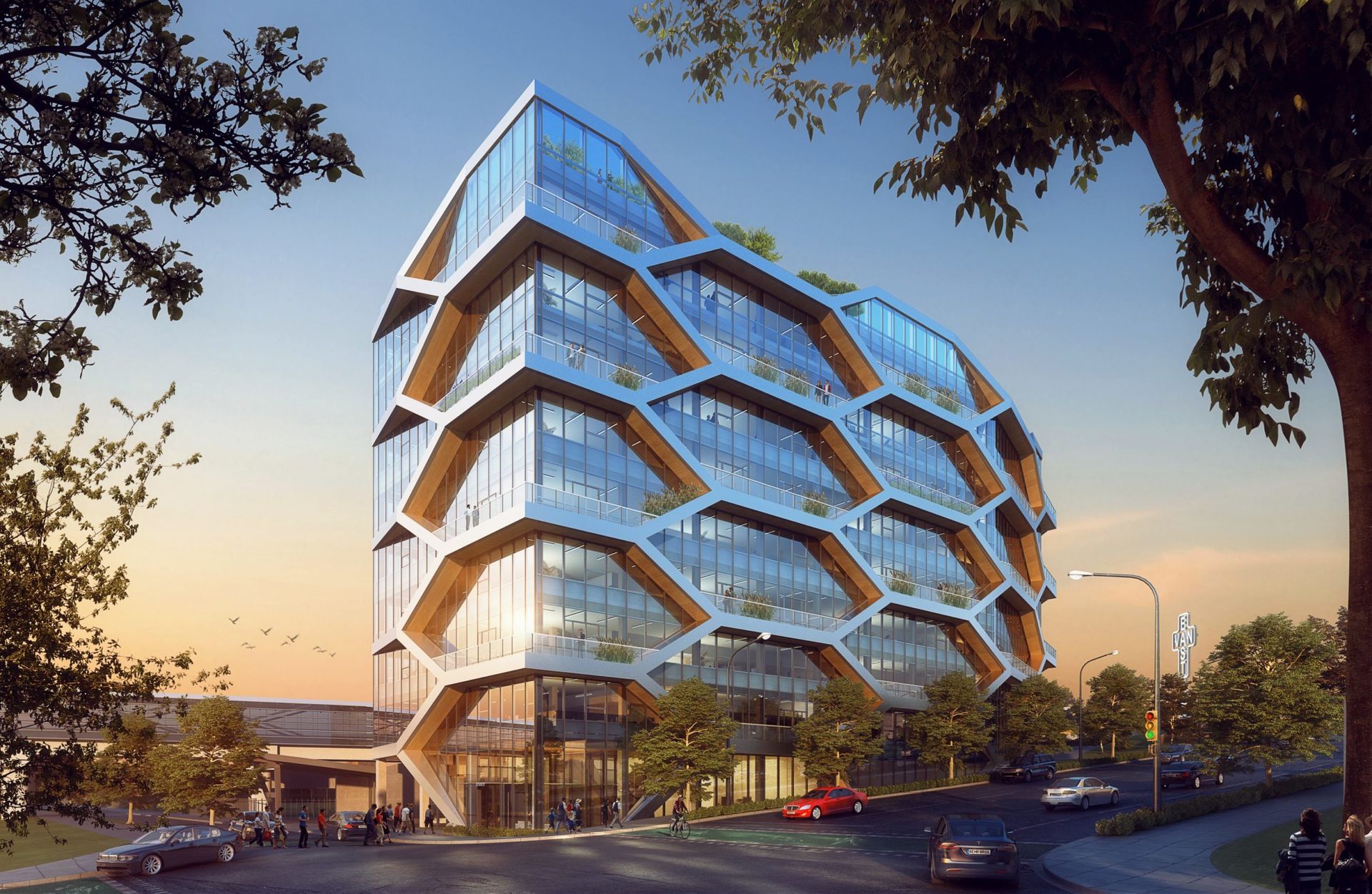
Located in False Creek Flats (Vancouver), **The Hive** is a ten-story office building of approximately 15,550 square meters. Designed by the renowned studio **DIALOG**, the building stands out for its innovative **cellular exoskeleton** that resolves seismic requirements using Glued Laminated Timber (Glulam) braced frames and Cross-Laminated Timber (CLT) walls, constituting the tallest braced timber structure in North America.
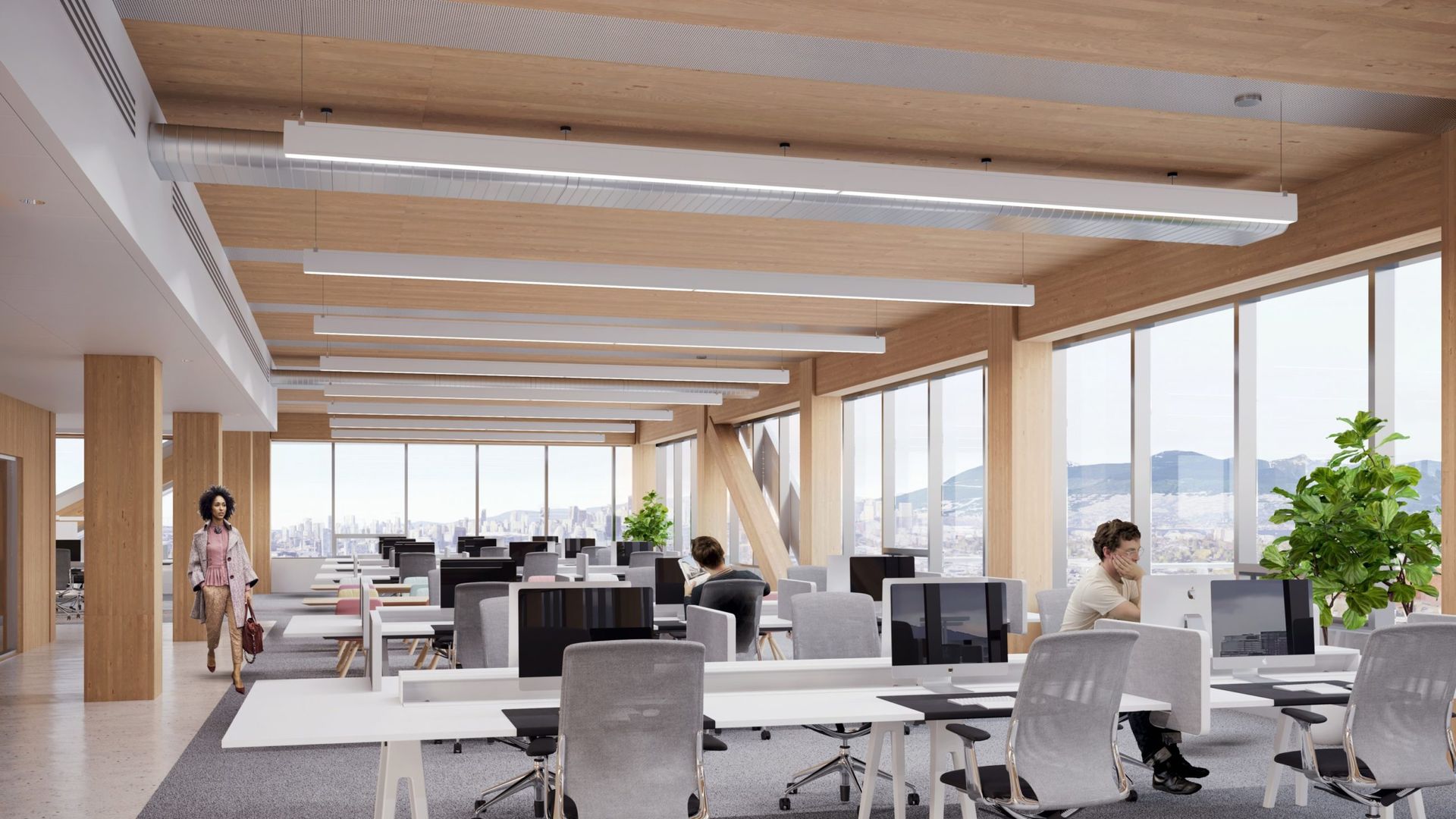
The architectural design prioritizes perimeter balconies with integrated planting, large glazed surfaces for natural light, and exposed structural mass timber throughout its floors. Targeting LEED Gold certification, the timber components and hybrid facades were prefabricated off-site, achieving an agile dry assembly that minimizes construction waste.
Royal BC Museum · PARC Campus · Victoria, Canada
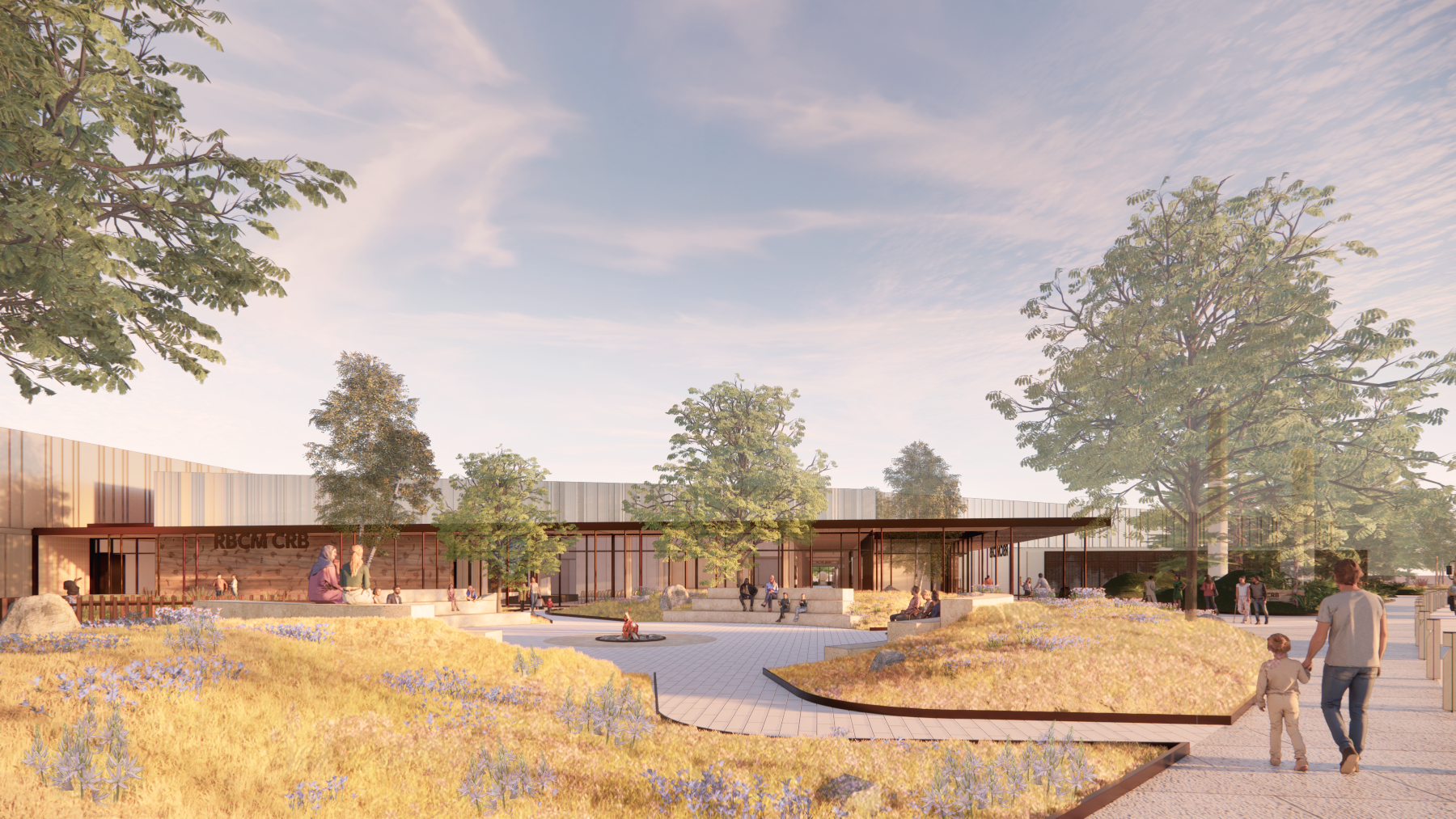
The new **PARC** campus (Provincial Archives, Research and Collections) of the Royal British Columbia Museum, located in the traditional territory of the lək̓ʷəŋən (Lekwungen) nation, is designed to house over seven million cultural specimens and historical collections. Designed by **Michael Green Architecture** (MGA), the building utilizes structural mass timber of local and regional origin, integrating harmoniously with the coastal forest.
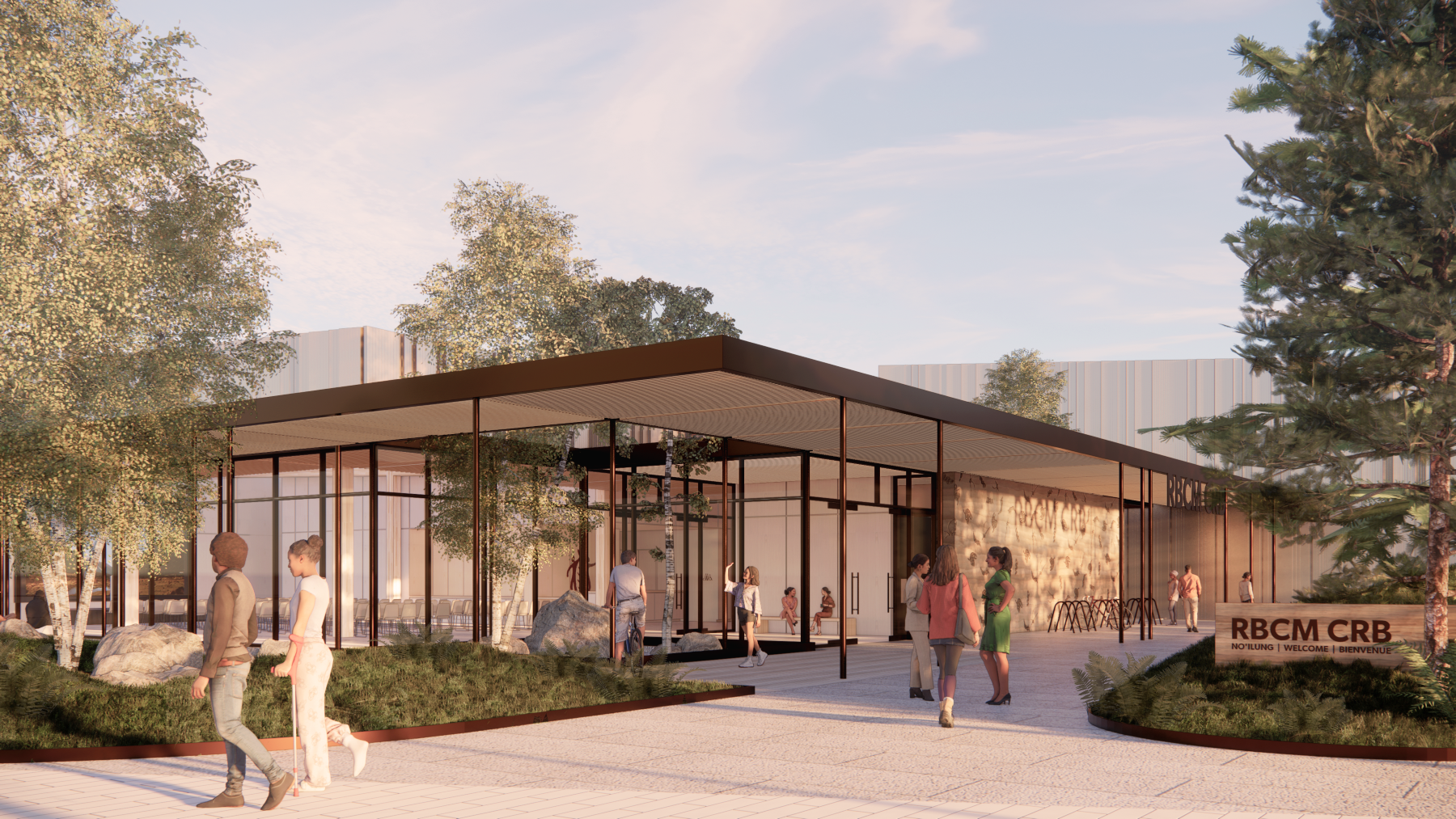
The building combines climate-controlled technical preservation zones for the BC Archives with public areas where visitors can directly observe the research laboratories. Designed under the LEED Gold standard, the project boosts the local mass timber economy and establishes a physical and visual bridge between scientific research and the community.
Stockholm Wood City · Sickla, Sweden
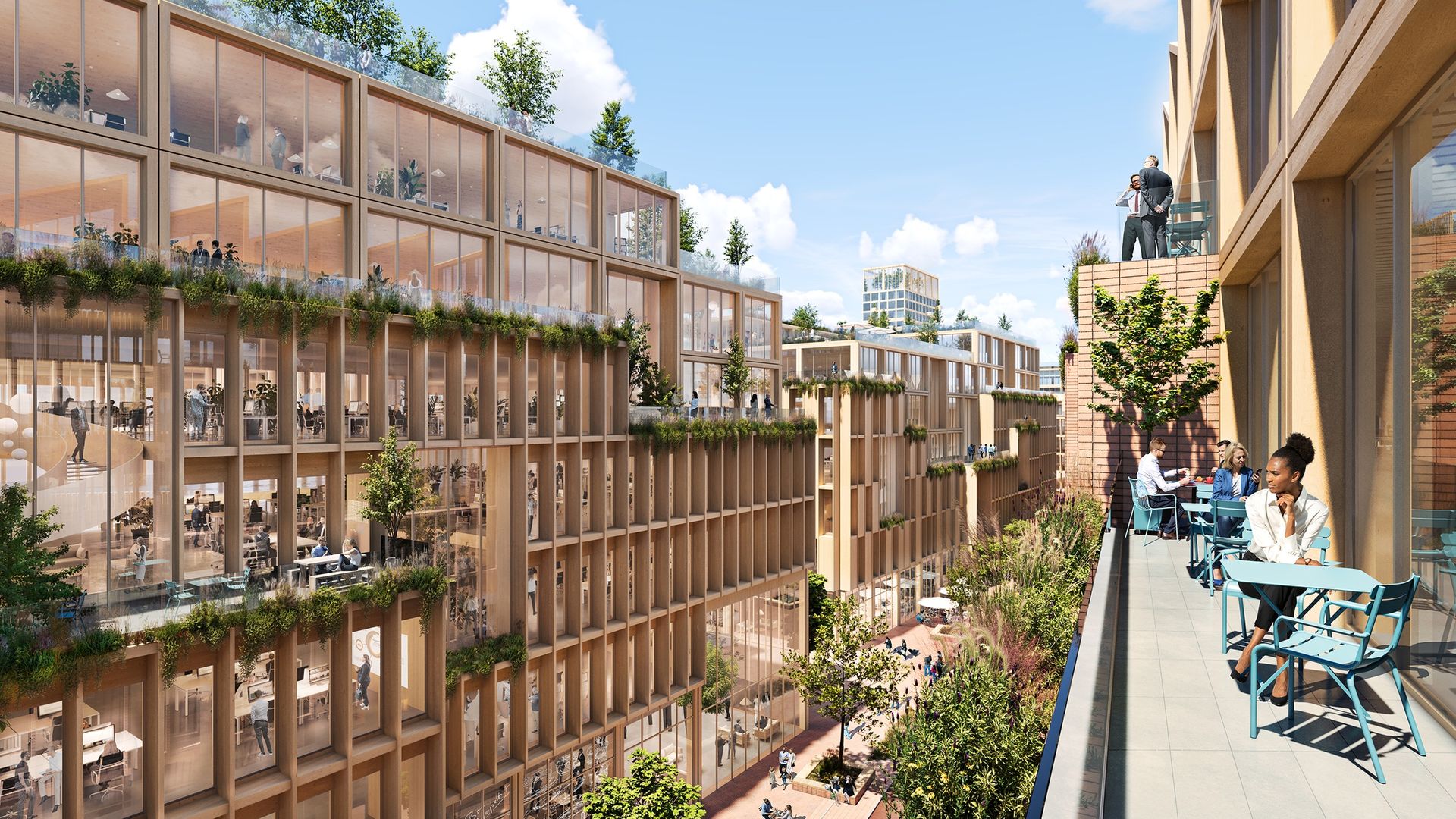
Spanning over 250,000 square meters, the **Stockholm Wood City** megaproject by the studios **Henning Larsen** and developer Atrium Ljungberg, is shaping up to be the largest wooden urban development on the planet. Located in Sickla (Stockholm), the masterplan projects over 7,000 jobs and 2,000 homes united by the aesthetic of structural mass timber.
The multi-family residential and corporate buildings will be constructed using fire-retardant treated Nordic engineered timber, incorporating green roofs, on-site solar photovoltaics, and shared thermal distribution networks. The proposal seeks to create a real fifteen-minute city, where the community can actively participate in co-creating their environment.
C6 · Perth, Australia
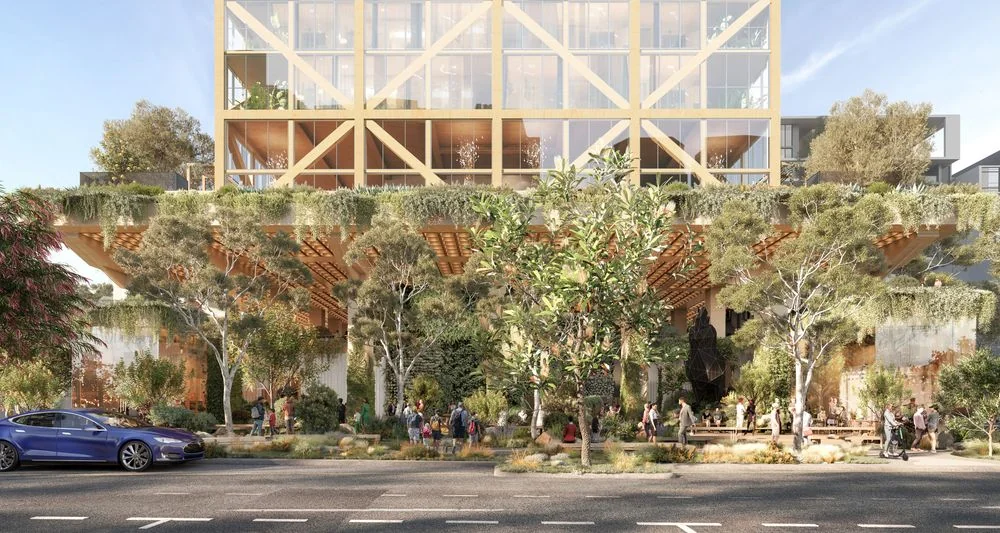
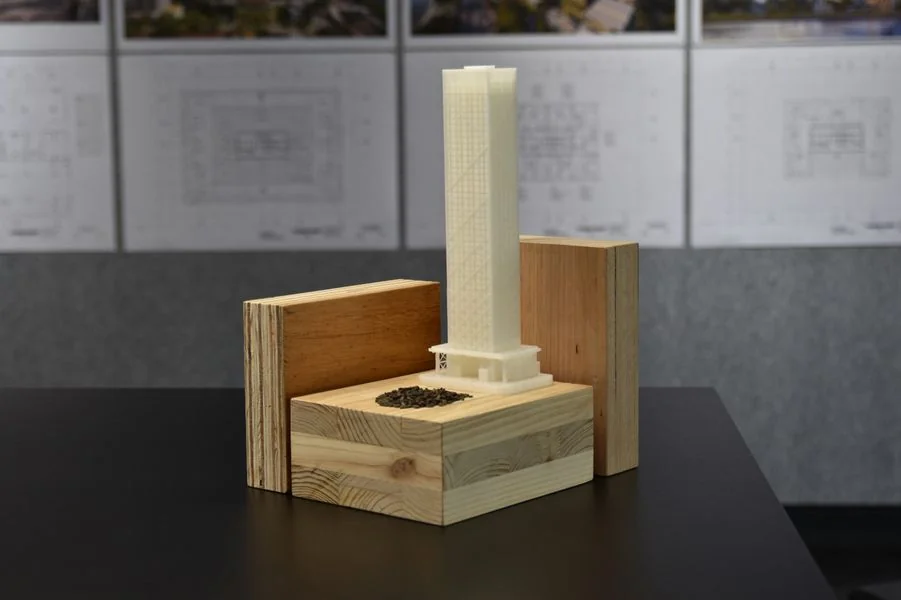
Located in South Perth, **C6** is a project by Grange Development and the design studio **Fraser & Partners** approved in 2023. At fifty stories tall and 191 meters above the ground, the tower will become the tallest hybrid mass timber skyscraper in the world, surpassing Milwaukee's Ascent tower. The structure of laminated timber columns and Cross-Laminated Timber floor slabs represents approximately 42% of the building's total structural material volume.
The development team has committed to publishing the technical plans and structural engineering details under an **open source** model to accelerate the development of global mass timber. The tower will operate with one hundred percent renewable energy, incorporating green agricultural areas and a shared electric vehicle fleet.
Gelephu International Airport · Bhuta
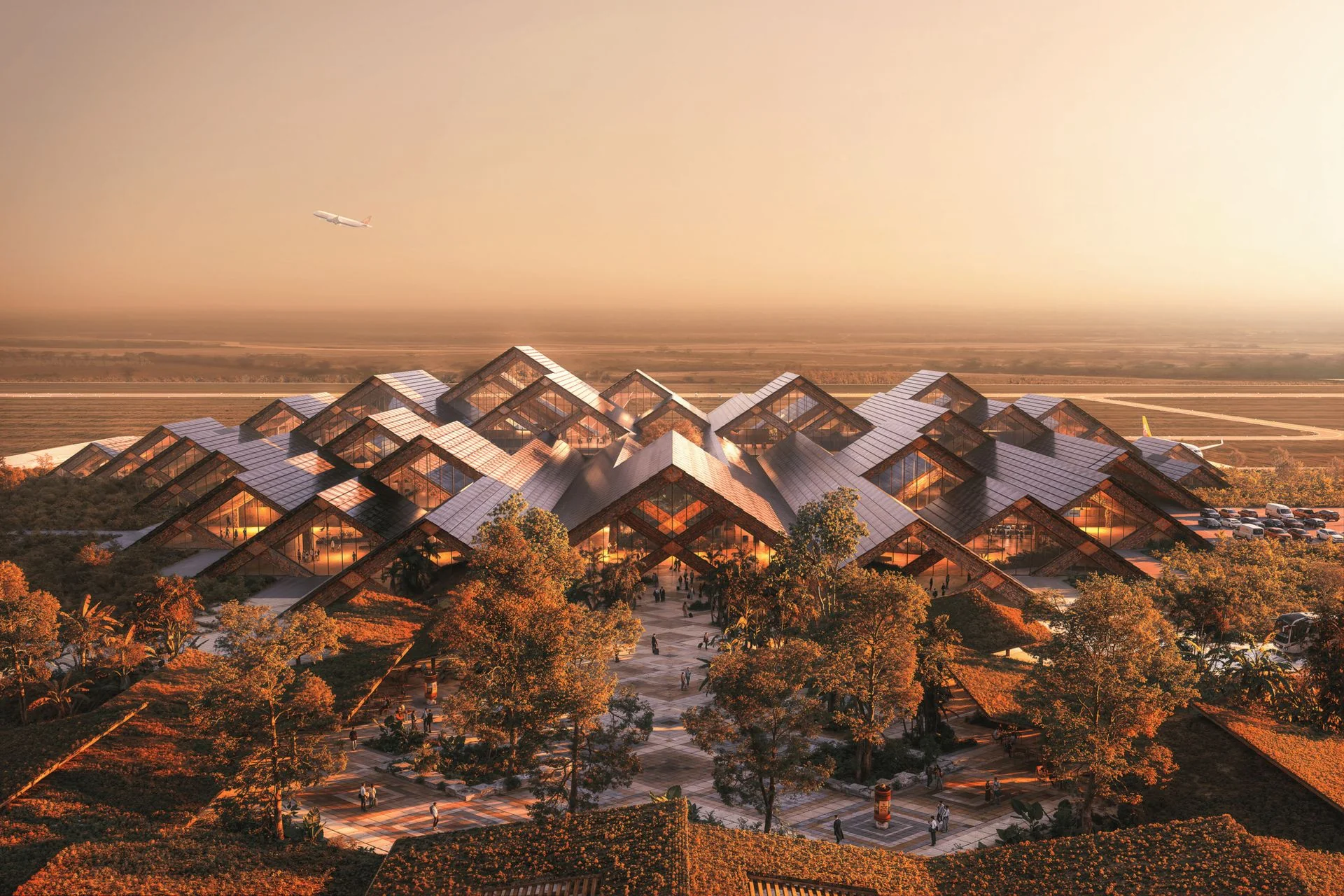
Designed by the international studio **BIG** (Bjarke Ingels Group) in conjunction with Arup engineering and NACO, Bhutan's second international airport is the most ambitious infrastructure piece of the future Gelephu Mindfulness City (GMC). Spanning ~68,000 square meters, the terminal features a **modular local Glued Laminated Timber diagrid structure**, inspired by traditional Bhutanese ornamental wooden pillars.
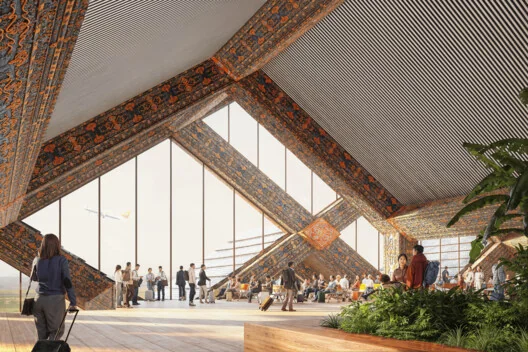
The airport's passive design includes generous shading eaves, cross natural ventilation, and the "Forest Spine" central landscaped courtyard. Formally presented at the 2025 Venice Architecture Biennale and with opening projected for 2029, the airport represents a statement of principles in Bhutan (the first carbon-negative country on the planet), uniting industrial prefabrication and cultural heritage.
What these six projects have in common
- Typological diversity: from massive urban districts to high-demand airport terminals, structural timber demonstrates its maturity and repeatability.
- Smart hybrid systems: structural mass timber is not used in isolation; it is optimally combined with concrete foundations and metallic exoskeletons to maximize structural performance.
- Place coherence and biophilia: each project boosts biophilic design by integrating green courtyards, passive air flows, and natural ventilation for community health.
Go Deeper
- Grandes hitos de la construcción — global iconic milestones already compl
- Interiorismo y confort en madera — biophilic design and acoust
- Proyectos en madera latinos — cases in Latin America and Iberi
- Neoconstructoras en madera — digital business models
- Generalidades de mass timber — mass timber basics
Madebloque informational edition — May 2026. Data and references compiled from press sources and cited official architectural websites.