En el mundo hispanohablante y latinoamericano, la edificación en madera es una realidad tangible, respaldada por proyectos entregados.
Case Studies: Planning and Execution in the Latin Context
Ecoparque Ciénaga de Mallorquín · Barranquilla, Colombia
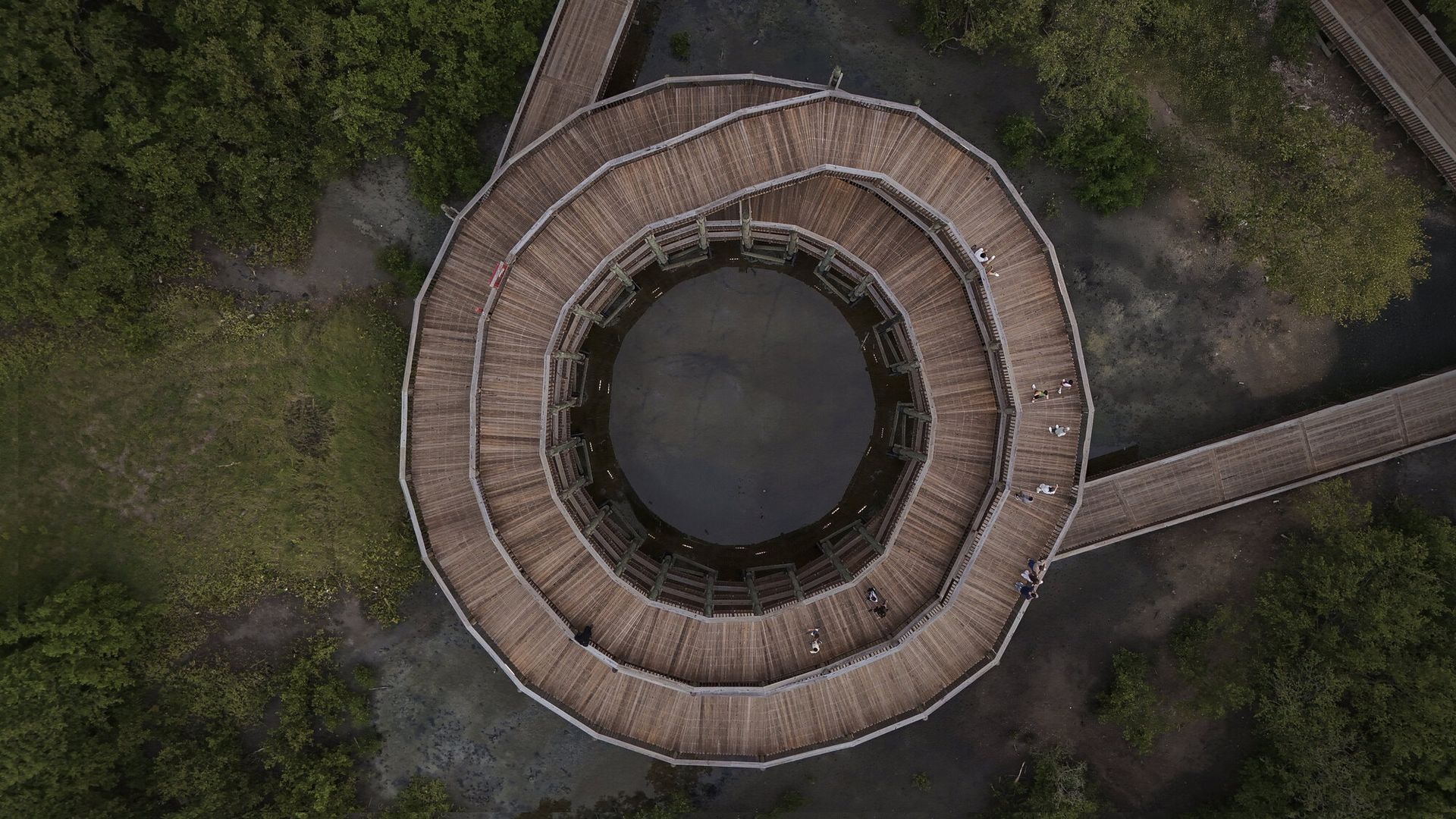
This massive public urban and landscape infrastructure project directly reconnects the city of Barranquilla with the valuable ecosystem of the Ciénaga de Mallorquín. Co-designed by DEB and El Equipo Mazzanti, the ecopark features kilometers of elevated walkways and service pavilions built entirely with sustainably sourced timber. The technical planning of the project gave absolute priority to coastal bioclimatic adaptation: the pavilion design favors natural shade, cross-ventilation, and the use of stainless steel mechanical connections that resist the high salinity and humidity of the tropics. It represents an outstanding example of how engineered timber integrates into public conservation infrastructure without disturbing the natural wetland.
La Serrezuela · Cartagena, Colombia
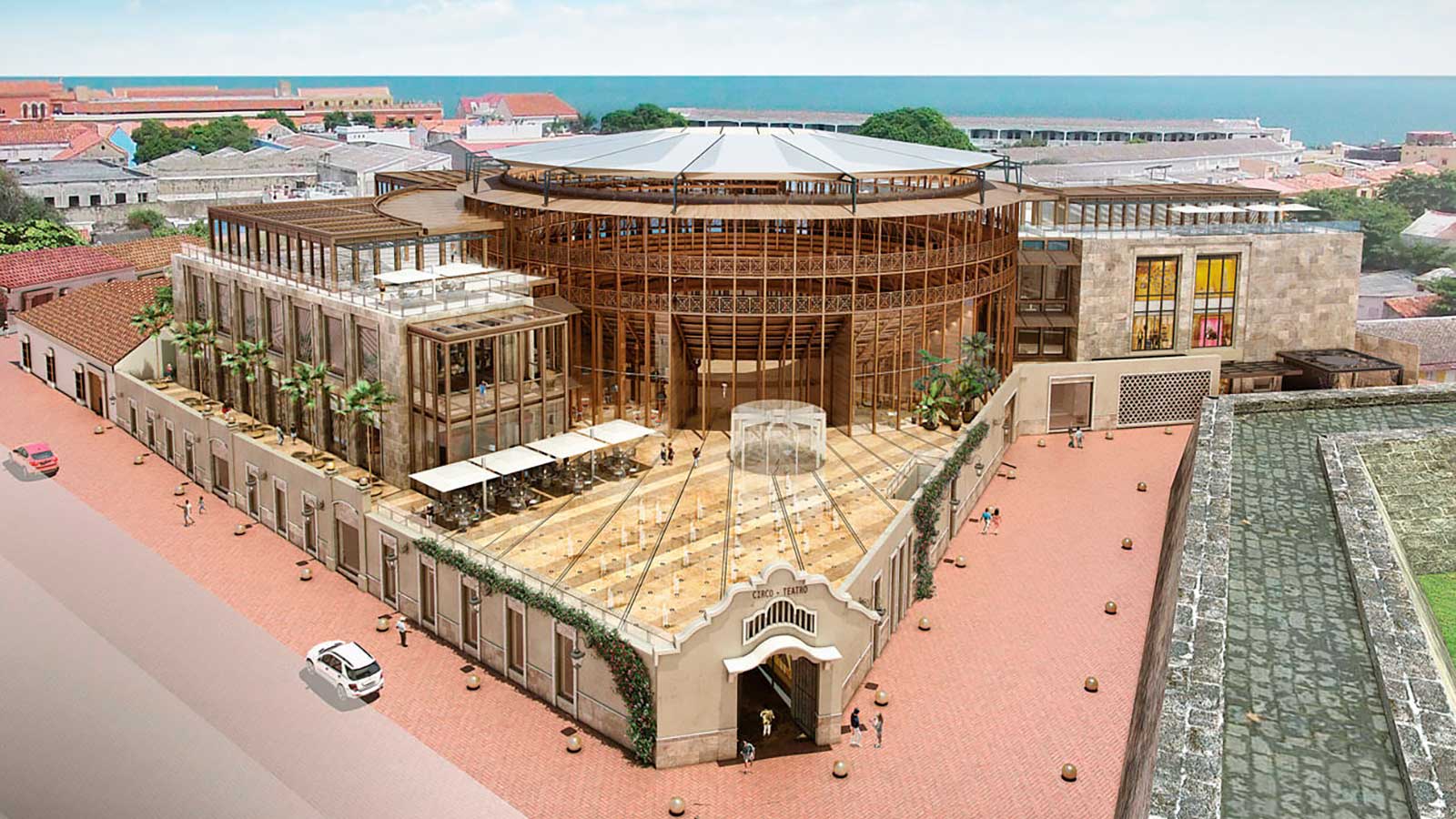
La Serrezuela, a historic bullring originally built of timber in the year 1893 and declared a National Monument of Colombia in 1995, was reborn through a highly complex technical restoration project led by the firm Arquitectura & Ingeniería. The structural reconstruction of its concentric grandstand required the use of Madera Laminada Encolada (Glulam or MLE) imported from Europe, with internal steel brackets and concealed metal connections that guarantee the seismic-resistant stability of the building in an aggressive marine environment. The execution of the project represented a masterpiece in complex interface planning: it was necessary to coordinate precision manufacturing in a European workshop with port logistics and a millimeter-precision assembly in a highly protected heritage conservation site.
Burgos Net Zero Building · Santiago, Chile
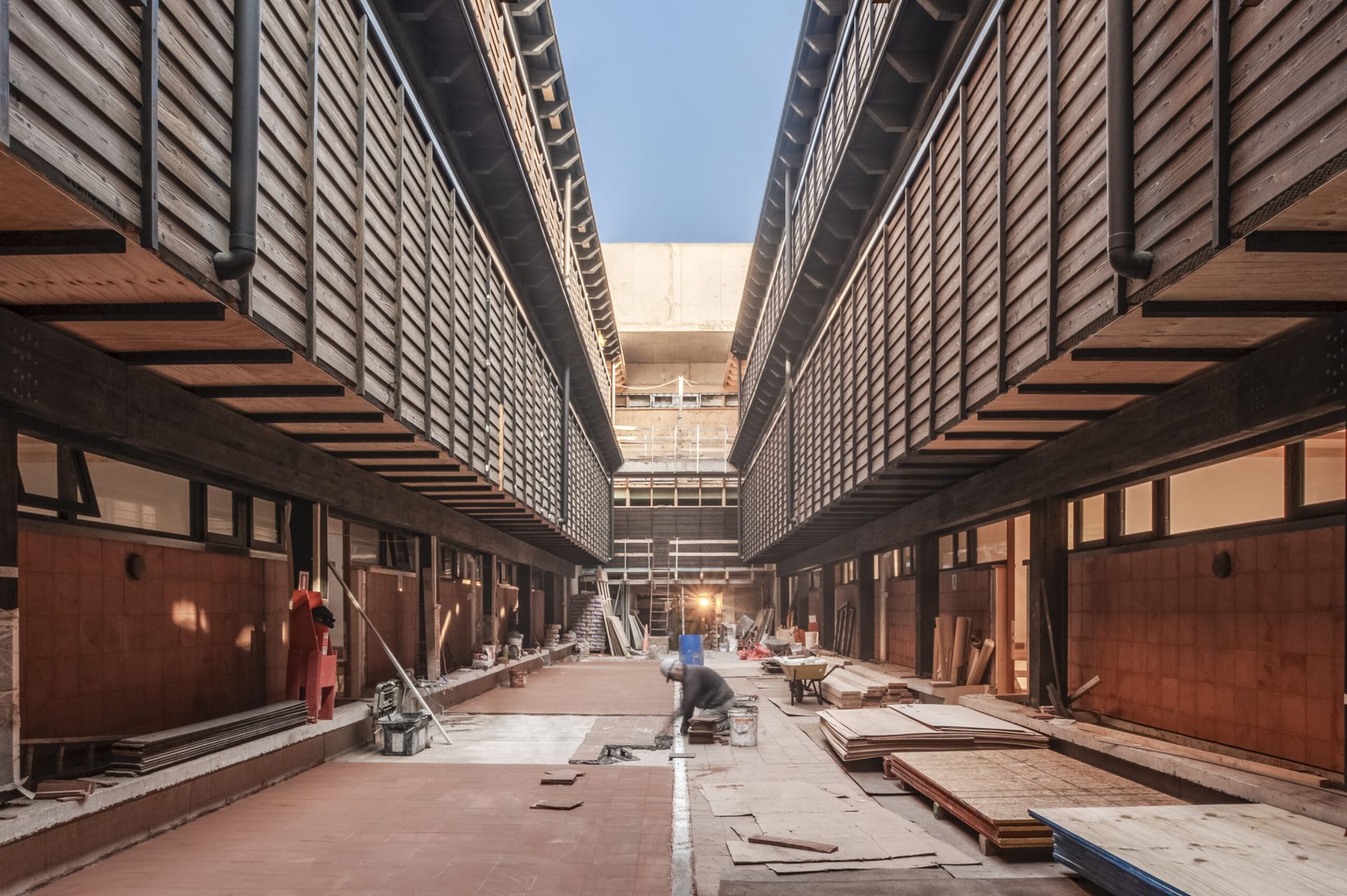
Burgos Net Zero is a four-story mixed-use office and retail building (~1,740 m² of built area) designed by architect Cristián Izquierdo Lehmann and built by the construction company Tecton. The structure is resolved entirely with beams and columns of local radiata pine Madera Laminada Encolada from the Hilam de ARAUCO system, with structural engineering by the Soler firm. The building is a continental milestone, becoming the first building in Latin America to obtain Minergie certification for net-zero energy consumption and net-zero carbon emissions. Its planning combined from the conceptual stage the use of sustainable plantation timber with rooftop photovoltaic panels and high-performance thermal insulation, documenting and certifying its actual carbon footprint to auditors.
Proyecto Residencial Tamango · Patagonia, Chile
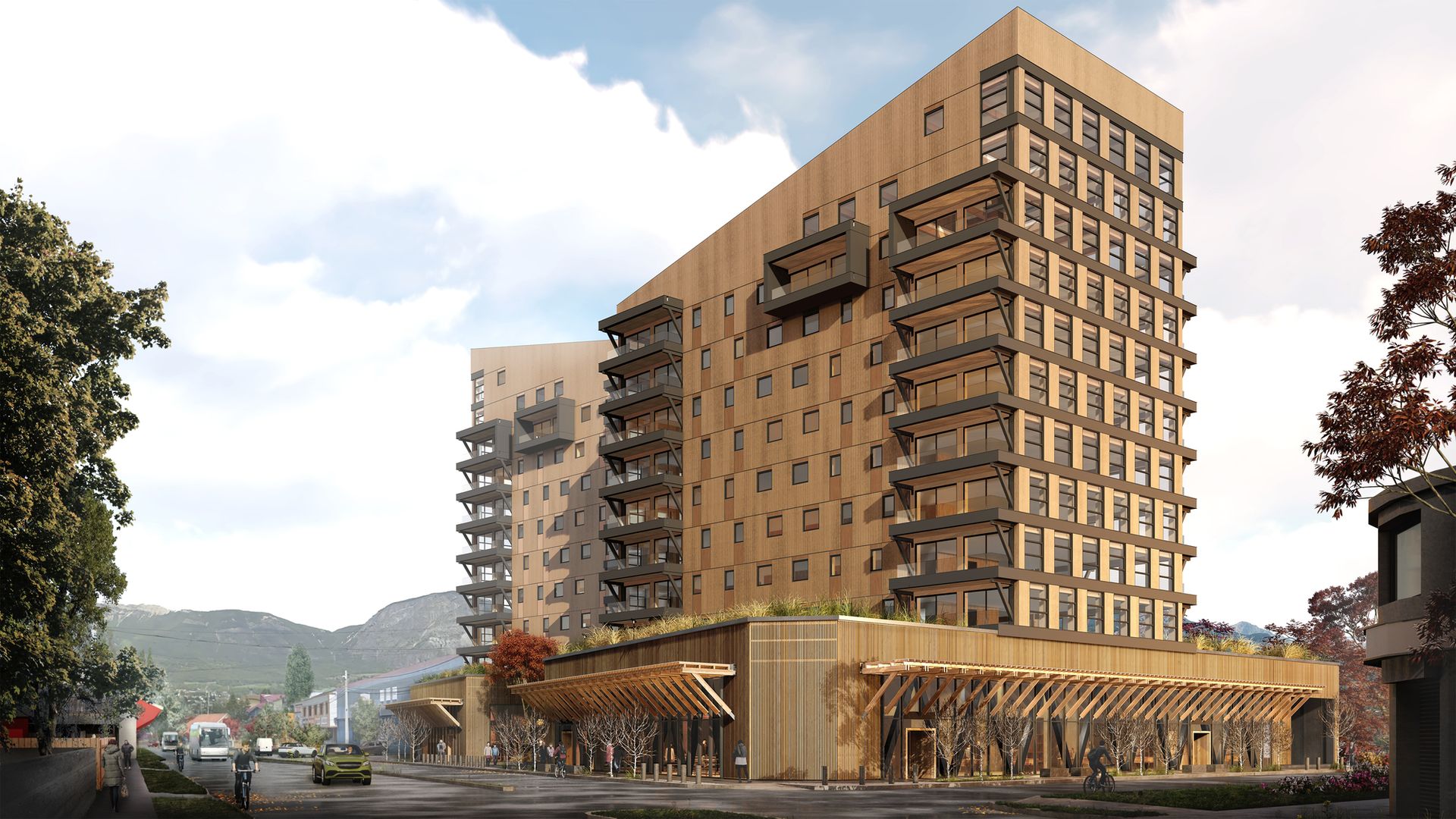
Developed by the prestigious firm Tallwood Architects, the Tamango project is shaped to be the first high-rise residential building (~12 stories) built entirely with prefabricated Madera Laminada Cruzada (CLT, Cross-Laminated Timber) panels in southern Chile. The structural design and logistical planning had to overcome the extreme weather conditions of Patagonia — hurricane-force winds and heavy rains — through an ultra-fast dry assembly model. All the building components are cut and numbered using computer numerical control technology in the workshop and transported to the site for rapid erection. This project demonstrates that mass timber industrialization is a high-performance solution even in the region's geographical periphery.
Complejo Escolar Moradias Infantis · Tocantins, Brazil
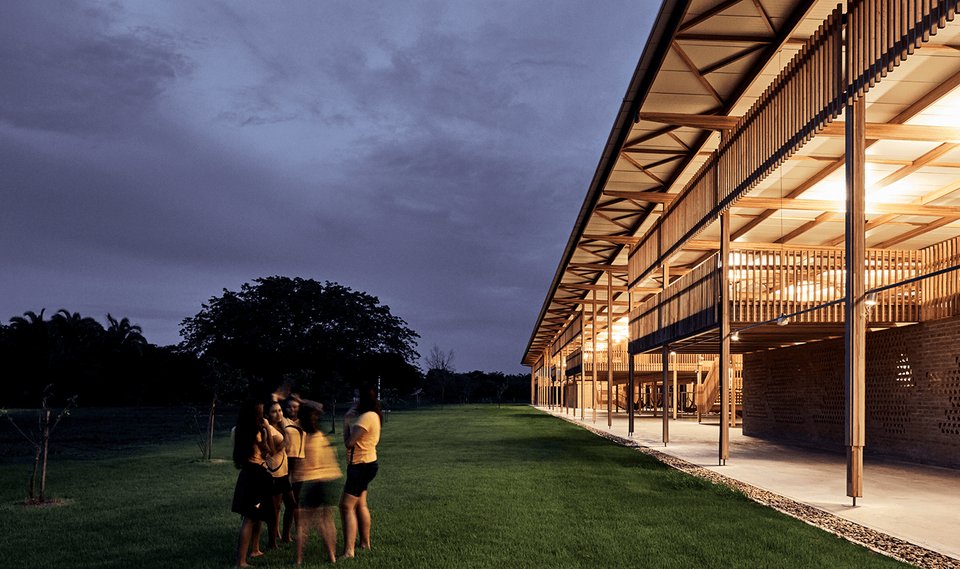
This boarding school complex for the Bradesco Foundation (~23,000–25,700 m² of built area) was designed by architects Rosenbaum y Aleph Zero, and manufactured and installed in mass timber by the specialist firm ITA Engenharia. Considered the mayor obra en Madera Laminada Encolada de América Latina, the school features wide curved roofs and housing modules that demonstrate exceptional passive thermal comfort in the hot climate of the Brazilian cerrado. The planning integrated a high-precision digital fabrication process in ITA's own plant in Brazil. The execution of the work received the prestigious RIBA International Prize in 2018 and the Building of the Year award by ArchDaily, consolidating itself as a global benchmark of sustainable architecture with high social impact.
Complejo Residencial Oceanika · Málaga, Spain
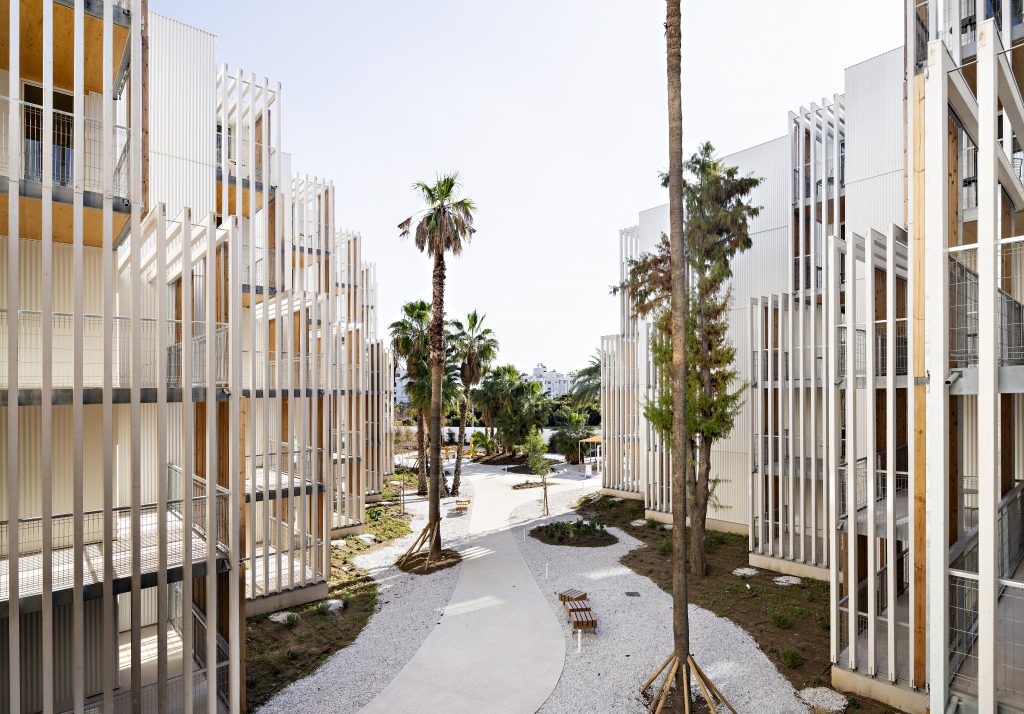
Oceanika is the mayor complejo residencial construido en madera del sur de Europa, covering ~14,800 m² of above-ground living area. Designed by the firms Bakpak Architects y EOVAStudio, the project was structured from a bioclimatic envelope that uses solid prefabricated timber panels supplied and installed by the Basque firm Egoin. The integrated planning of the project prioritized passive solar orientation, cross-ventilation, and natural shading to easily meet the BREEAM environmental label with an Excellent rating. In the construction phase, the intensive use of prefabrication drastically reduced construction waste and accelerated the on-site assembly schedule.
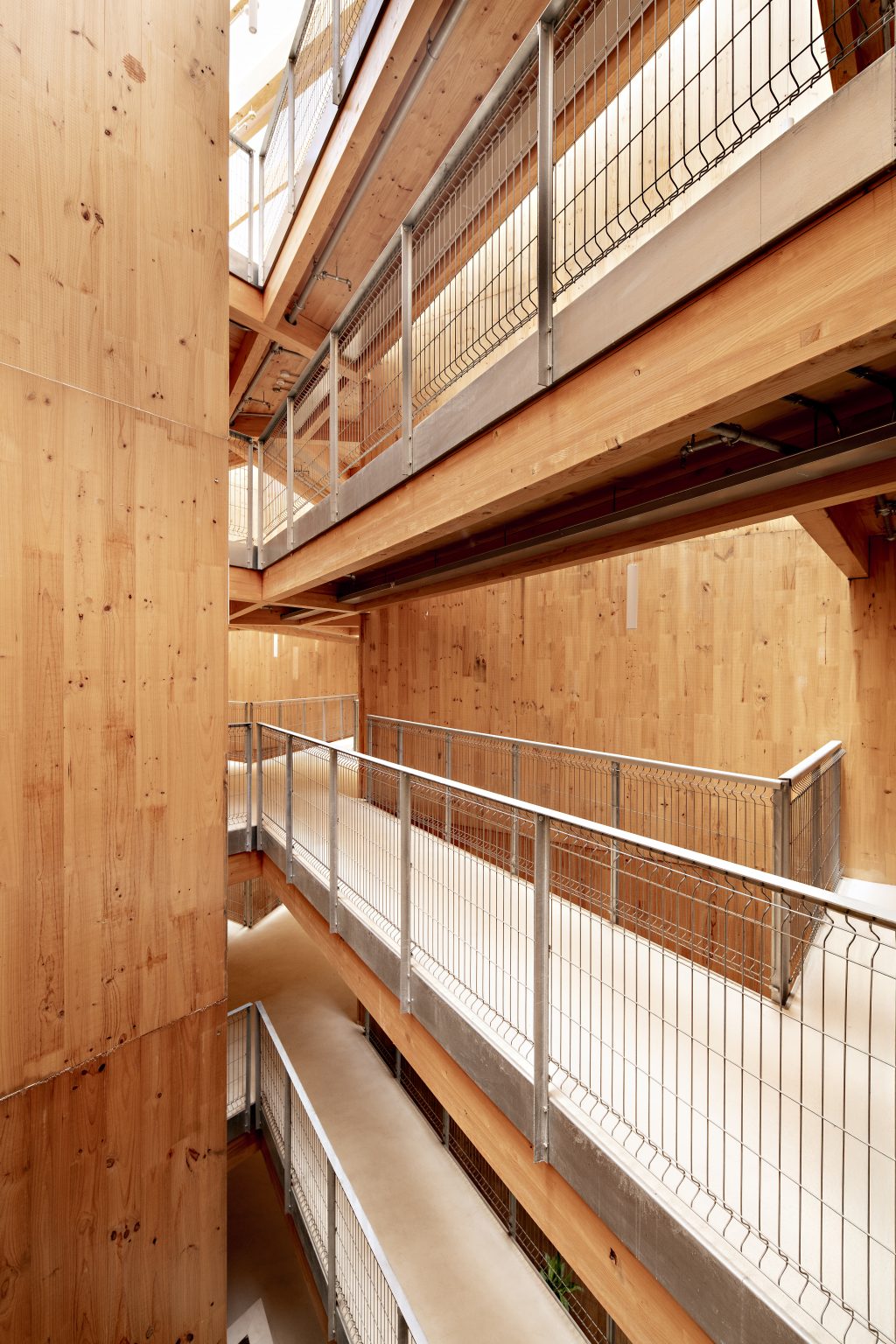
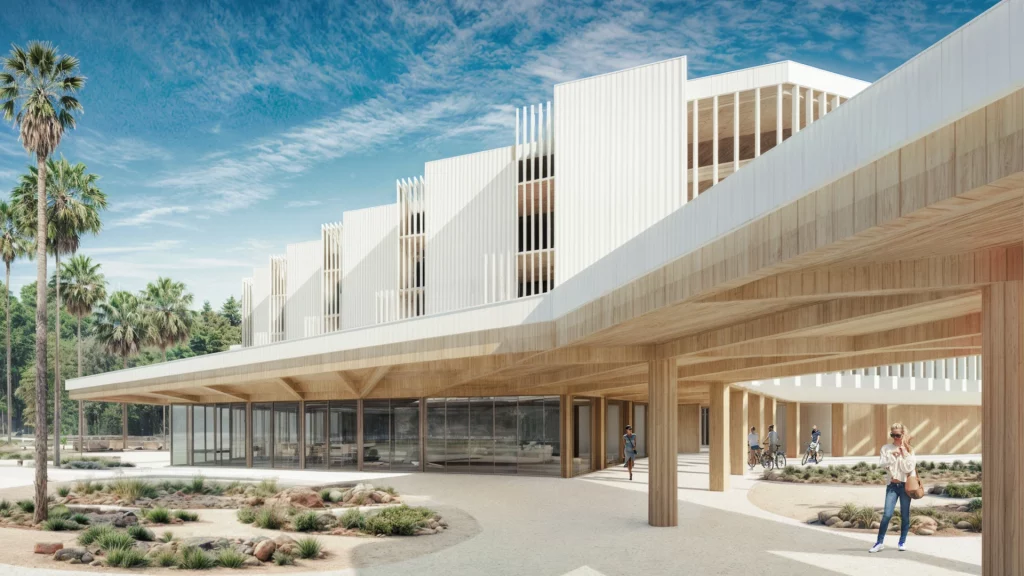
The core concept of the project was based on regenerating and revitalizing the abandoned plot of the former Los Álamos hotel, converting a degraded urban void into a modern model of coliving y alojamiento flexible. The complex consists of approximately 180 modular apartments designed for tech workers and digital nomads from the Andalusia Technology Park, organized in a zigzag geometric façade that rotates to optimize direct solar capture and natural ventilation. Common spaces, including coworking, community kitchens, and sports areas, complete a high-density, low-impact urban proposal.
Logros y Reconocimientos del Proyecto: the residential complex has been awarded the First Prize AMAD 2026 (Timber Architecture Association), the First Prize at EXPOCONSTRUYE 2025, and the prestigious First Prize in the Advanced Architecture Awards at REBUILD 2025. In terms of environmental accounting, Oceanika's mass timber structure represents a fixed capture and net storage of 3,200 tons of carbon dioxide equivalent, and its industrialized assembly cut construction waste in half and shortened the total delivery schedule by six months compared to traditional concrete construction.
Go Deeper into Mass Timber and Digital Planning
- Structural mass timber overview — the basics of CLT and Glu
- How to measure sustainability in constructions — Life Cycle Assessment and ESG criteria
- Building carbon regulations — institutional frameworks and cred
- Operational data tracking — the integration of Speckle, Odoo, and
- Madebloque Services and Consultancies
Selected bibliography and academic reference sources: ARAUCO Hilam, Edificio Burgos Net Zero; Tallwood Architects, Proyecto Tamango; ITA Engenharia, Moradias Infantis; Bakpak Architects & Egoin, Proyecto Residencial Oceanika. Edición bilingüe informativa de Madebloque — mayo 2026.