In a technical timber building, the structure is often left completely exposed: ceilings, beams, and columns are an indissoluble part of the interior atmosphere. This radically transforms how a space is lit, how sound propagates, how it smells, and how occupants feel — structural timber is not a simple decorative detail at the end of the project, but the core of living comfort.
What changes when wood is also the interior?
In traditional construction systems, the concrete or steel structure is hurriedly hidden behind drywall partitions and false drop ceilings. In structural mass timber projects (mass timber), the timber structure itself is the final finish: the ceiling the guest sees upon waking up, the column framing the window, or the large pillar in the lobby. This duality forces interior design to be thought out from the early conceptual schematic s
Exposed structural timber adds tactile warmth, organic texture, passive hygrometric regulation, and an unparalleled sense of nature in closed spaces. This is what modern architecture defines as biophilic design: the deliberate integration of natural patterns and elements into the built environment to mitigate stress and measurably improve occupant health.
Biophilia: why visible wood feels calming
The sense of calm produced by wood is not a trend or a subjective psychological effect. Various scientific studies document that natural light interacting with timber fibers reduces heart rate, regulates blood pressure, and lowers cortisol secretion in the brain. In the real estate and hospitality sectors, this quality translates into a **premium differentiated comfort**: a hotel room or apartment where guests sleep under a natural timber ceiling does not compete solely on square meters, but on real quality of life.
Two typologies, two interior readings
Mid-rise housing — Carbon12 (Portland, USA)
With eight stories of height, the Carbon12 residential building (2018), developed by the firm Kaiser+PATH, is one of the most influential references for multifamily housing on the US West Coast. In this project, the superstructure of Glued Laminated Timber (Glulam) beams and columns and Cross-Laminated Timber (CLT) floor slabs is left exposed in interiors. The interior design dialogues directly with the structure: natural wood floors, neutrals on drywall partitions, and indirect lighting were selected to complement and soften the texture of the structural timber, without visually cluttering the domestic space.
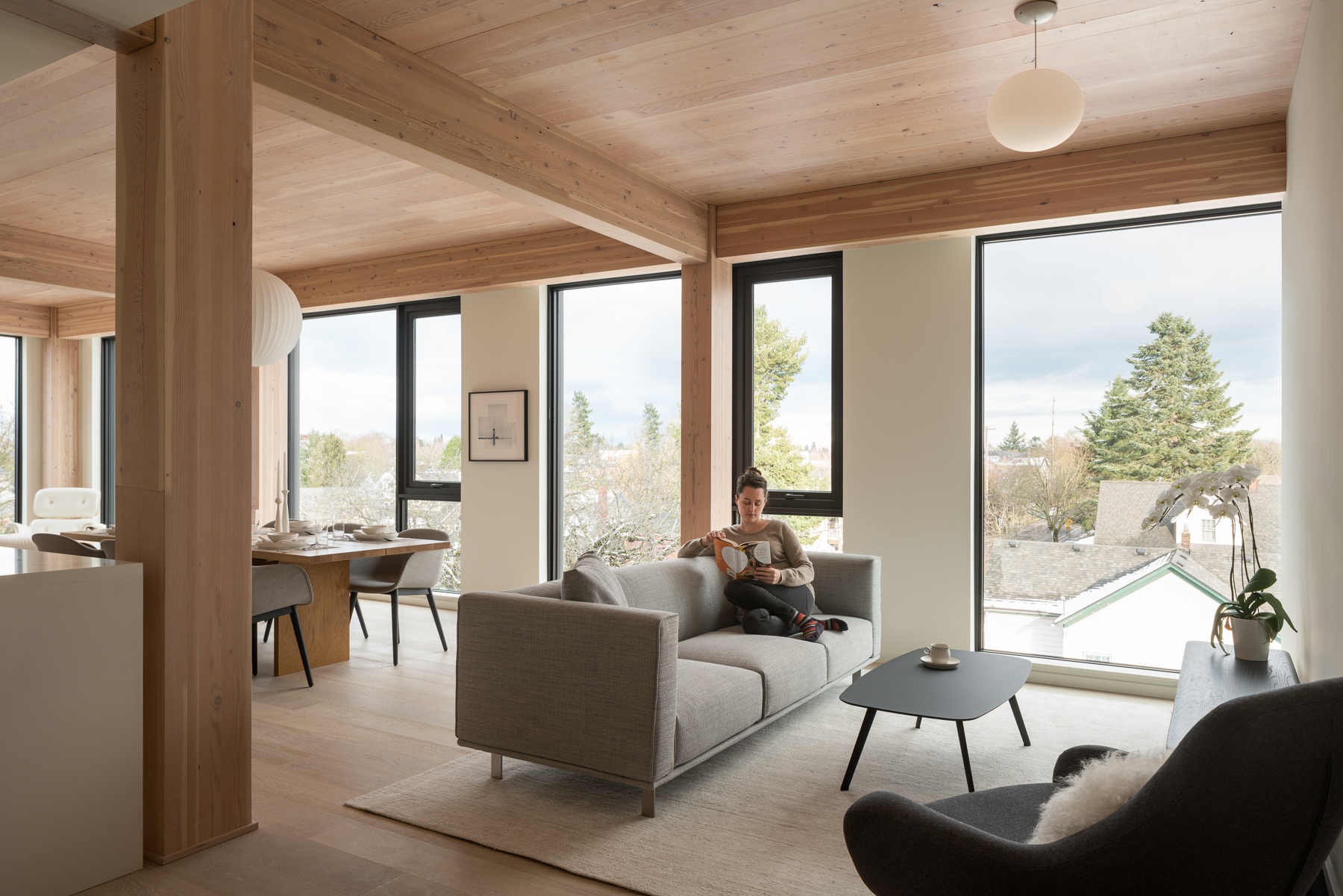
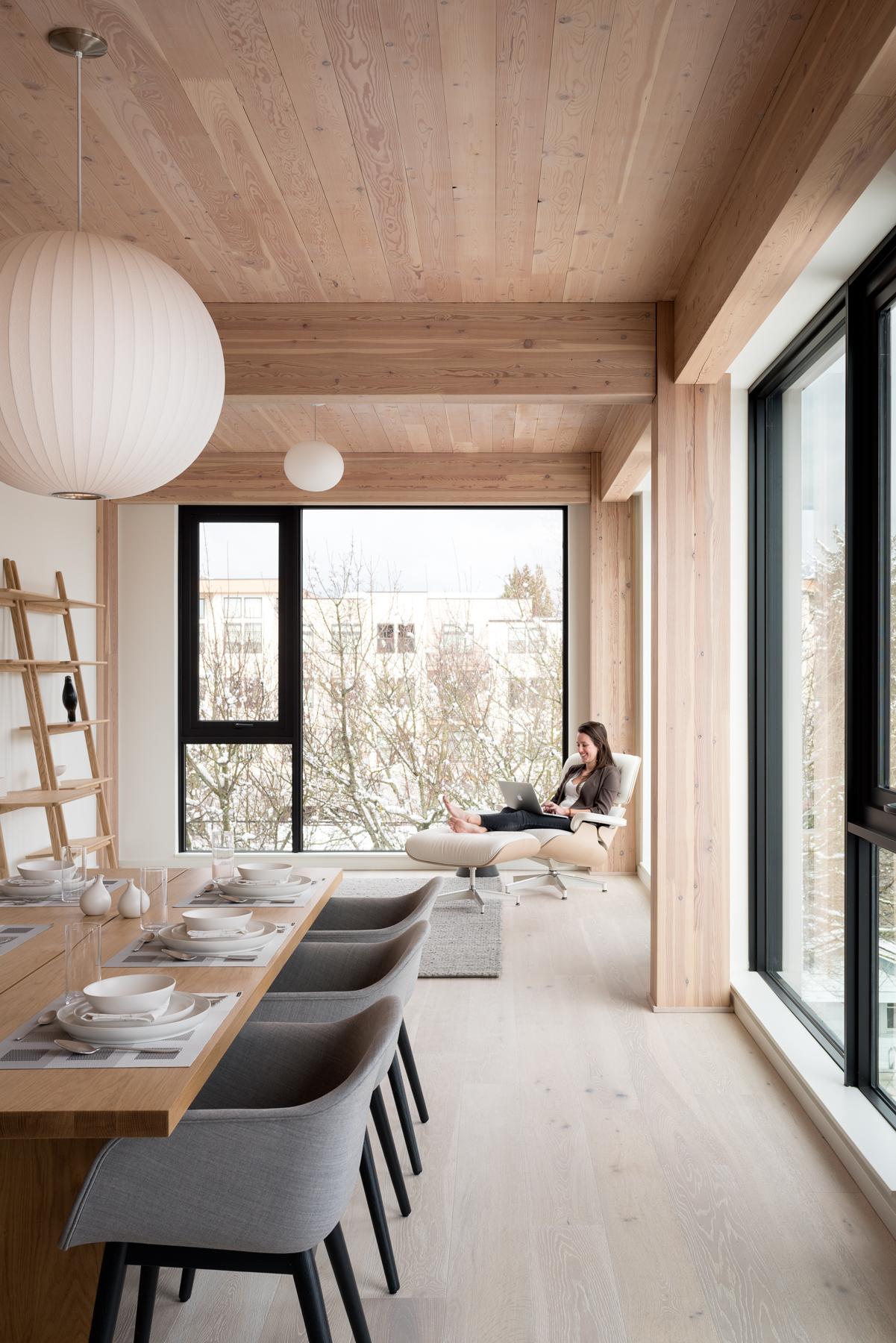
In the homes of Carbon12, exposed wood defines the scale and warmth of the home. The custom millwork details and textile palette were designed not to compete with the grain of the exposed Cross-Laminated Timber floor slabs on the ceiling, prioritizing low-glare luminaires that highlight the natural relief of the timber.
From interior design to a clear ceiling
Leaving structural engineered timber visible is aesthetically rewarding but demands iron technical discipline. The primary goal is to maintain a "clear ceiling" (clear ceiling), preventing pipes, electrical trays, and fire sprinklers from cluttering the visual space. This is achieved through three strategies:
- Coordinated services and ducts: grouping utility runs into strategic vertical shafts or localized drop ceilings in corridors and wet areas (bathrooms and kitchens).
- Composite structural slabs: pouring a lightweight concrete or floating gypcrete topping over acoustic underlayments on the top side of the Cross-Laminated Timber slab, resolving impact sound transmission and hiding floor electrical conduits without covering the ceiling of the room below.
- Raised access floors: in office buildings or corporate coworking spaces, the use of raised access floors facilitates total flexibility for networks and data cabling.
This strict planning is managed optimally through integrated building information modeling tools, as explained in our BIM article.
Acoustics, comfort, and indoor air quality
Living comfort goes far beyond temperature. Thanks to the natural hygroscopic behavior of wood, exposed surfaces absorb excess moisture and release it when the air is dry, reducing the presence of dust mites and pathogens in the air. However, due to the lower self-weight of timber structures compared to concrete, acoustic privacy requires a layered design approach.
In Colombia, these technical considerations align with the guidelines of the VIS 4.0 framework for sustainable social housing, which prioritizes thermal, acoustic, and visual comfort. Likewise, the analysis of wellness in operation ("Health and Well-being" dimension of the how to measure sustainabilityguide) promotes the continuous measurement of indoor CO₂ and relative humidity, a standard scientifically validated in landmark residences such as Brock Commons.
Mass timber interior design checklist
- Structural exposure percentage: define which slabs, beams, and columns will remain exposed and which areas (bathrooms, kitchens) will receive traditional c
- Neutral material palette: select textiles, paints, and furniture in neutral or earthy tones that complement the exposed structural timber without cluttering the space.
- Indirect lighting design: avoid recessed fixtures in structural CLT panels to prevent fiber damage; prefer suspended systems or indirect lighting that enhances the natural wood grains.
- Layered acoustic engineering: incorporate acoustic isolation underlayments for airborne and impact noise in floor assemblies and elastic wa
- Hidden services strategy: plan clear ceilings by concentrating sprinklers and cabling in technical service shafts.
- Indoor hygrometric control: ensure mechanical ventilation systems compatible with the natural expansion and contraction properties of timber.
- Adapted spatial narrative: differentiate the extreme privacy required by hospitality from the domestic warmth of housing.
Go Deeper
- Generalidades de mass timber — mass timber basics
- Proyectos en madera latinos — cases in Latin America and Iberi
- Cómo medir la sostenibilidad — comfort and Life Cycle Assessment
- Rol del BIM en la construcción — digital services coordination
- Grandes hitos de la construcción — global iconic milestones
Madebloque informational edition — May 2026. All rights and images belong to the respective brands and consortia cited.