The Cocun Project is projected as a milestone in sustainable urban construction in Bogotá, planned as the capital's first hotel structured in engineered wood. Designed under the Build to Rent (BtR) model, this 20-room boutique hotel in the Galerías corridor combines an aesthetic and ecological proposal with open financial structuring and a rental pool managed 100% passively and delegated. In this article, we lay out the project details: from its architectural plans to the investment breakdown and first-year operating projections.
- Presale price: $10 MM/m² (on sellable area)
- Fiduciary rights (FIDIS): 8,000 rights available to the public (out of 10,000 total)
- Total built area: 1,179 m² (including common and technical areas)
- Sellable area: 950 m² (commercializable private area of suites and commercial premises)
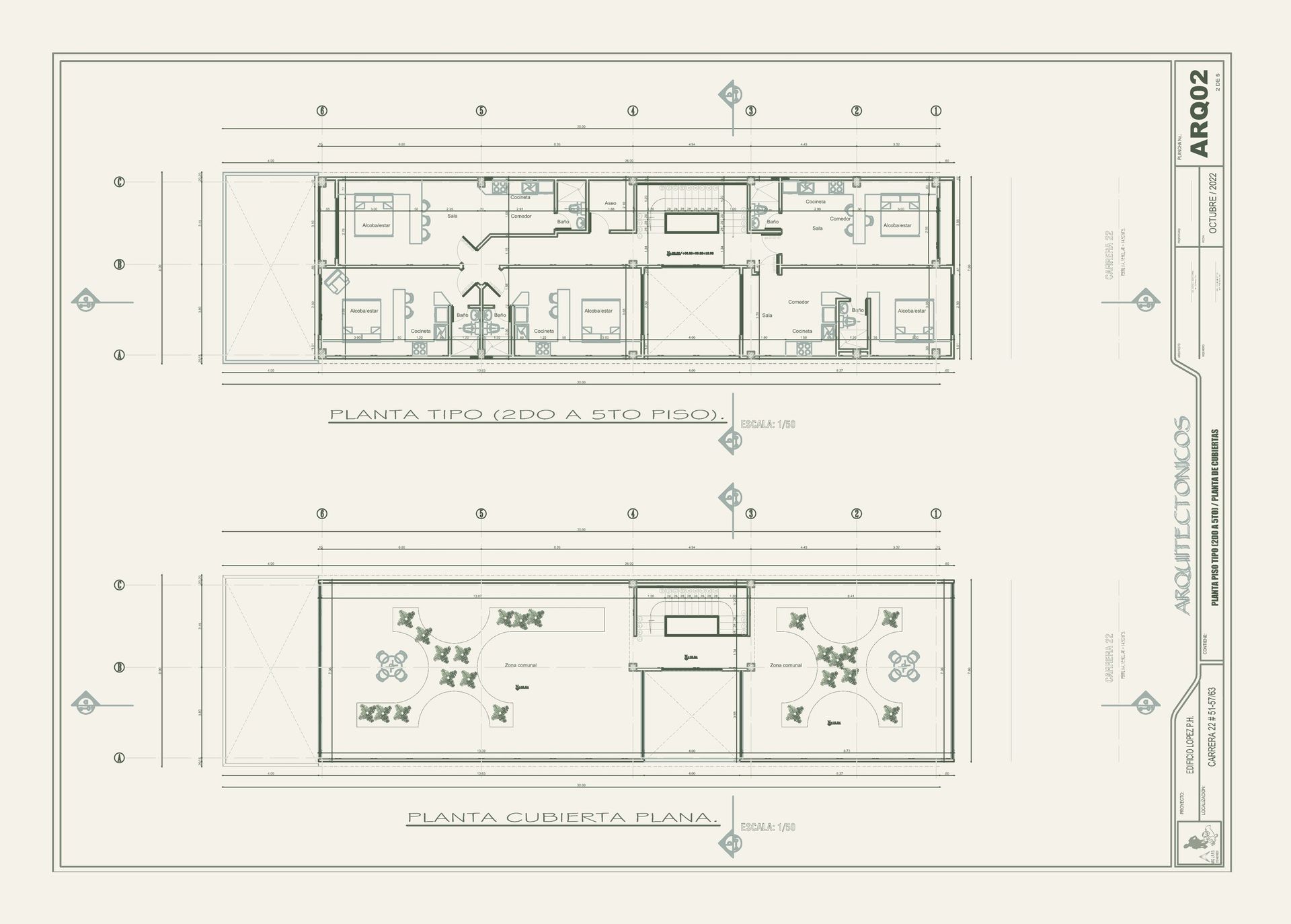
- Capacity: 20 design rooms (5 suites of 20 m² and 15 studio apartments of 25 m²)
- Operator: Hotel management 100% delegated to Nabilera
Architectural Plans and Spatial Distribution
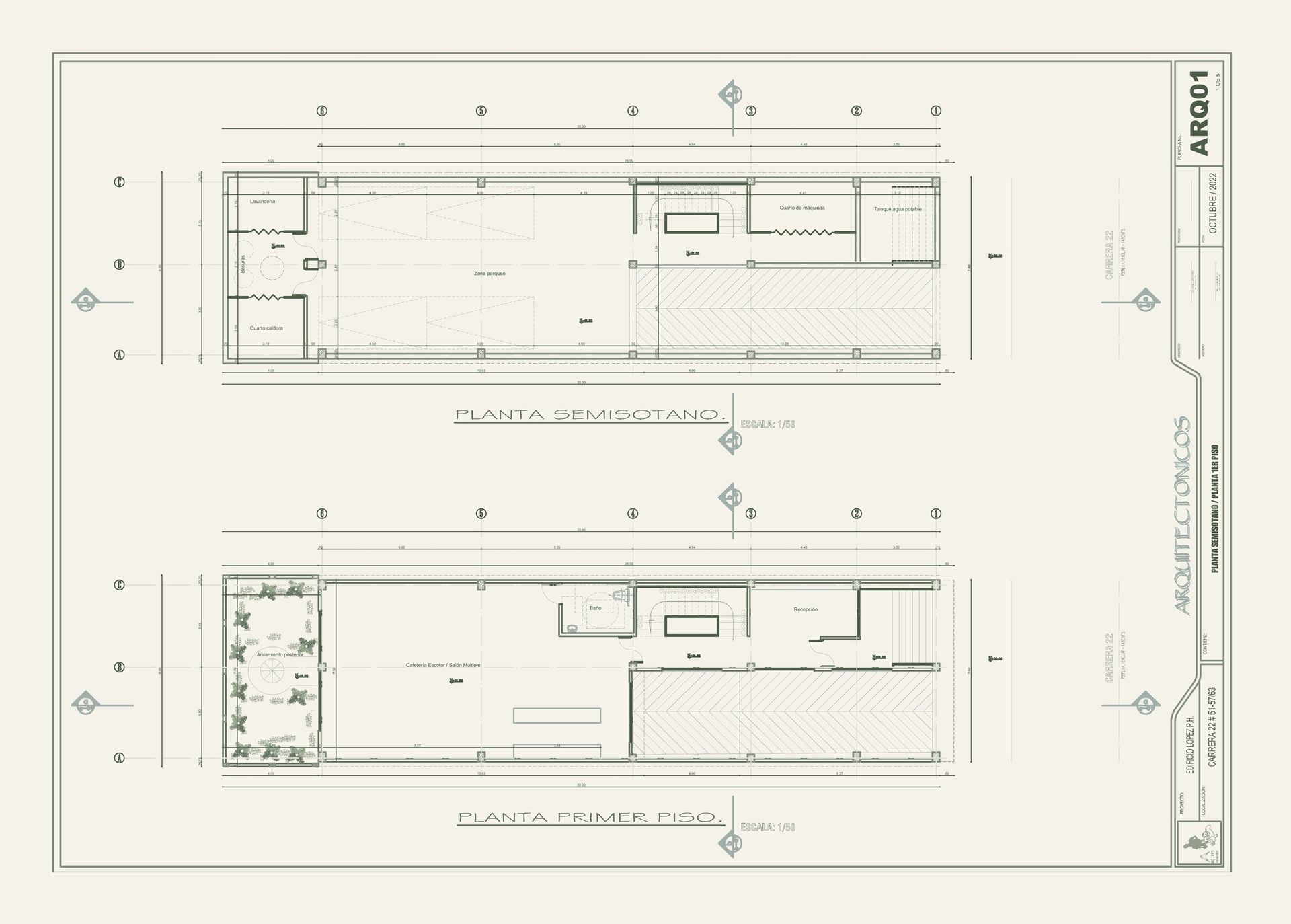
El proyecto esta ubicado sobre un lote de 240 m² (8 m de frente por 30 m de fondo) en la Carrera 22 # 51-63.
Access and Services Plan (ARQ01)
Typical Floor and Roof Plans (ARQ02)
Product Structure: Fiduciary Rights
Investing in Cocun does not mean buying an isolated apartment to manage individually. The investment is made by acquiring Fiduciary Rights (FIDIS) representing a proportional share in the independent trust (patrimonio autónomo), which owns the lot, the building's superstructure, the hotel equipment, and net cash flows from the commercial operation.

Location, Market and Sustainability
La ubicación determina el flujo de caja. Situado en el corredor de Galerías, el proyecto se conecta directamente con flujos de turistas deportivos, culturales y académicos gracias a la cercanía con el Estadio El Campín, el Movistar Arena y las universidades del sector. Esta demanda constante sustenta las p
To back its ecological impact and capture financial value, the project is structured under national and international green building standards:
- CASA / CCCS: Alignment with the green building seal of the Colombian Council for Sustainable Construction for access to green finance rates.
- Law 1715: Utilization of tax incentives and VAT exclusions for low-impact materials and renewable energy generation (photovoltaic panels of the *Solar Rooftop*).
- Operación Net-Zero.
Investment breakdown
The total budget for the Cocun Project is distributed across five major categories, totaling an estimated development cost of $7,244 MM for a projected total built area of 1,179 m²:
| Category | Estimated Cost |
|---|---|
| Land (contribution of the 240 m² plot) | $1,000 MM |
| Permits, designs, and procedures | $350 MM |
| Marketing, supervision, and insurance | $778 MM |
| Direct construction (structure + finishes): we are budgeting a construction cost per square meter of $4 MM/m². | $4,716 MM |
| Initial hotel equipment and furnishing | ~$400 MM |
| Total project | $7,244 MM |
The land represents approximately ~14% of the total cost, a favorable proportion that reflects the efficiency of building vertically with engineered timber on a compact plot in a consolidated area.
How is a real estate development budget structured?
In the Colombian construction industry, two key concepts are essential for understanding a budget:
PEM (Estimated Materials and Labor Budget): what it costs the constructor to execute the physical work — materials, direct labor, equipment, and subcontracts. It is the technical core of the cost.
PEC (Estimated Contractor Budget): it takes the PEM as a base and adds the contractor’s overhead (~19%, which includes administration, contingencies, and profit). In a real estate development, the total construction cost is typically 40% to 50% above the pure PEM.
Additionally, a well-structured project contemplates indirect costs that ensure commercial and technical viability:
- Commercial cost: ~3% of total sales (marketing, sales room, materials).
- Construction management: 2.5% to 3% of the construction budget.
- Project management: 4% to 7% of the total cost, depending on complexity.
- Brokerage commissions: 1% to 2% on closed sales.
Understanding this structure allows the investor to distinguish between a realistic budget and one that omits critical costs to inflate apparent profitability.
Why does $10 MM/m² today mean more value tomorrow? — The Valuation Bridge
A pre-sale investor enters at the price of the sellable area ($10 MM/m² on 950 m² of private suites), but their fiduciary right represents a portion of a much larger, fully equipped, and active hotel asset of 1,179 m² of built area.
| Entry Concept (Presale) | Calculation / Formula | Equivalent Value |
|---|---|---|
| Entry Investment | 950 m² sellable × $10 MM/m² | $9,500 MM |
| Construction + Land Cost | Land + PEM + PEC + Expenses | $7,244 MM |
| Gross Profit / Backing | Presale Sales ($9,500 MM) − Cost ($7,244 MM) | $2,256 MM |
| Issuance Valuation | 10,000 rights × ~$1.435 MM nominal each | $11.875 MM |
| Equivalent Value in Operation | $14,350 MM issuance ÷ 1,179 m² built | ~$10,72 MM/m² |
Proposal for the landowner
The scheme contemplates that the landowner contributes the plot valued at $1,000 MM to the real estate trust (patrimonio autónomo). With presale proceeds, once the financial close of construction is secured, the next capital is allocated on a priority basis to pay the landowners the agreed value of $1,000 MM plus a market return of 10% E.A. from the date of land contribution until effective payment.
Comparison: how much does each room cost?
Cocun proposes 20 rooms: 5 singles of 20 m² and 15 studio apartments of 25 m². The equivalent cost per 20 m² room, fully furnished and ready to operate, is approximately ~$243 MM.
En el mercado de Galerías, un apartamento pequeño comparable requiere una inversión similar — pero con una diferencia sustancial: el inmueble está para amoblar y además el comprador individual asume el 100% de la administración.
The Cocun model transforms that individual investment into a participation within a professionally managed hotel asset, with a fiduciary structure and the backing of three specialized promoters.
The 10,000 fiduciary rights
The Cocun Project is structured on a total issuance of 10,000 fiduciary rights:
| Participant | Rights | Percentage |
|---|---|---|
| Public sale (investors) | 8,000 | 80.0% |
| Madebloque (promotor) | 667 | 6.67% |
| Polok | 667 | 6.67% |
| Nabilera (hotel operator) | 666 | 6.66% |
| Total | 10,000 | 100% |
The entry price for investors is calculated on 950 m² of sellable area at $10 MM/m², reaching total presale revenue of $9,500 MM. The gross development profit — the difference between sales and total cost — amounts to $2,256 MM. Learn more about the project structure on the
Break-even point
The project reaches its break-even point upon securing 30% of presale sales, equivalent to $2,850 MM. Once this threshold is reached, the trustee authorizes the start of construction and the controlled release of funds.
Projected year-one operating balance
Once built and operational, Hotel Cocun projects the following results under a deliberately conservative scenario:
- Year 1 revenue: ~$1,052 MM
- Year 1 net profit: ~$432 MM
- Projected occupancy: ~60%
- Reference rates (low season): $150K/night (standard), $250K/night (studio apartment)
Projections based on conservative assumptions. They do not constitute a promise of profitability.
The gross development profit of $2,256 MM remains as operating backup capital within the independent trust (patrimonio autónomo), generating fixed-income yields at 10% EA (reference rate as of February 2026) while not required for the asset's operation or maintenance.
Conservative scenario assumptions
First-year projections are built with the following floor assumptions:
- Low-season rates applied year-round: the lowest rate of the range ($150K standard, $250K studio apartment) is used for all twelve months, without including increases for high season, holidays, or events.
- Occupancy below market average: the projected ~60% is below the average occupancy of hotels in the Galerías–Teusaquillo corridor of Bogotá.
- Annual provisions of $50 MM: funds are set aside for preventive maintenance, furnishing replacement, and operating contingencies.
- Zero financial debt: the project does not contemplate bank leverage, eliminating debt service costs and reducing structural risk.
Cocun is built from the data
Cocun is a project built from the data. The numbers are open, the assumptions are verifiable, and the fiduciary structure ensures that every peso is administered under clear rules.
Bibliography and references
- Superintendencia Financiera de Colombia, Circular Externa 029 de 2014 — regulatory framework for real estate trust businesses.
- Consejo Colombiano de Construcción Sostenible (CCCS) — sustainable construction standards in Colombia.
- EDGE / IFC World Bank Group — green certification methodology for buildings in emerging markets.
- Proyecto Cocun.pdf and Proyecto de hospedaje Nabilera_cokun.xlsx — financial structuring documents for the project.
Projections based on conservative assumptions. They do not constitute a promise of profitability. Madebloque informational edition — May 2026.